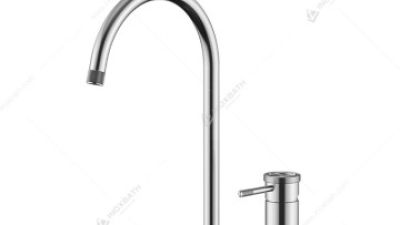
When global buyers are trying to pick out a Cold Water Filter Tap, they need more than just eye-catching product photos. Sure, good visuals catch your eye, but what really matters is verified performance, a stable supply chain, and clear, easy-to-understand technical info. Water quality can vary a lot depending on your city, building, or region. For example, a tap designed for municipal tap water might not work so well with private well water—that difference actually makes a big impact.
Rich Trethewey, a well-known plumbing and water-treatment guy, always reminds folks: “Good filtration starts with knowing your water.” That simple idea kind of sets the tone for the brands discussed here. Good manufacturers aren’t just throwing products on the market—they clearly explain what’s inside their filters, their capacity ratings, flow rates, pressure limits, and how often you’ll need to replace parts. They also back it up with testing results, easy-to-follow installation instructions, and support after the sale. Certifications like NSF/ANSI are helpful, but don’t just look for logos—make sure to check what they actually cover, because a logo is no guarantee on its own.
When it comes to the market in 2026, you’ve got some big names like Brita, 3M, Pentair, Franke, plus some smaller, specialized brands that cater to private-label buyers. Their products vary a lot—think cartridge designs, faucet materials, leak-proof features, and how you access for maintenance. For example, stainless steel bodies might be perfect if you’ve got a fancy kitchen, but simpler composite models can save you some bucks. Little details really do matter; a hidden cartridge might be super convenient… until it’s a pain to replace when needed.
Of course, no product list is perfect. Factory capacities can shift, and specs might differ depending on where you’re shopping or living. It’s a good idea to ask for current samples, check their production records, verify spare parts are available, and even test how it works with your water before you commit to a big order. This guide takes an experienced, evidence-driven approach to compare top Cold Water Filter Tap brands. And here’s a truth some folks don’t love hearing: the cheapest tap today might turn out to be the most expensive option in the long run.
Basically, don’t just go for the shiny stuff—do your homework, ask questions, and pick what really works for your water and your home. That’s how you get a tap that’ll serve you well for years to come.
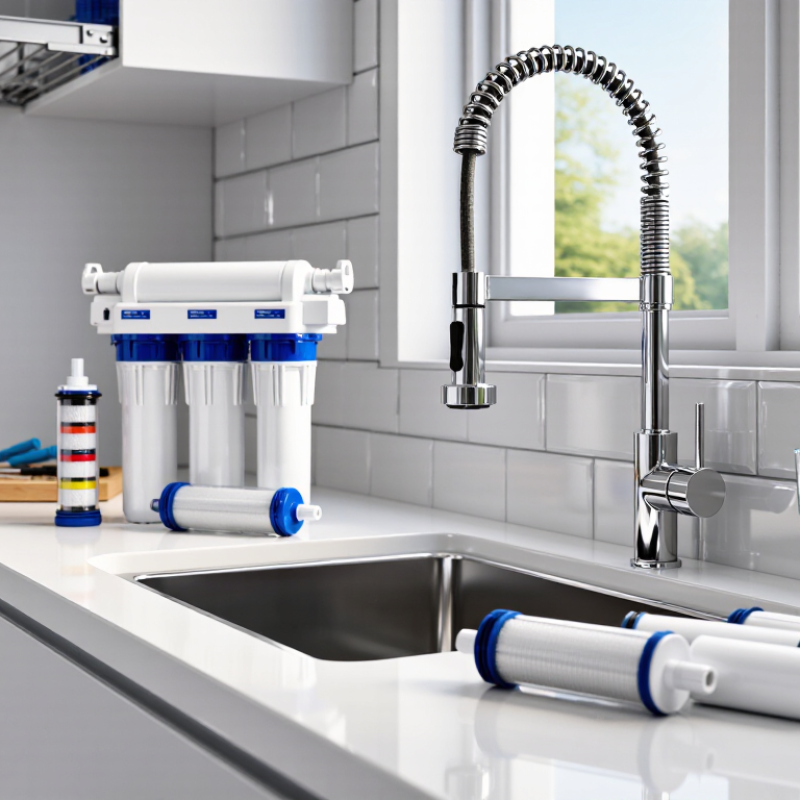
A Cold Water Filter Tap is a dedicated faucet that delivers treated drinking water. It usually connects to an under-sink filtration unit, not the household hot-water line. The tap may have one outlet for filtered water, while the main faucet handles washing and cooking tasks. This separation helps prevent hot water from damaging sensitive filter media.
The process is straightforward. Cold mains water enters a cartridge through normal supply pressure. A sediment layer can catch sand, rust, and visible particles. Activated carbon may reduce chlorine, unpleasant odors, and some organic compounds.
More advanced systems can add a membrane for dissolved impurities. The final water then travels through a narrow tube and exits the tap. Flow may become slower when the cartridge collects contaminants.
For global buyers, reliable performance depends on more than a polished surface. Check material safety records, pressure ratings, leak testing, and verified contaminant claims. A lead-free, corrosion-resistant body is important because the outlet touches drinking water daily. Installation must also match local pipe sizes and water pressure. Filter replacement intervals vary with usage and water quality. Hard water can shorten service life.
A filter tap is not a magic shield. It cannot correct every water problem. Some product descriptions sound broader than their test evidence. Buyers should request independent reports and clear replacement instructions. In real kitchens, a small drip often signals a loose connection, worn seal, or neglected cartridge. Regular inspection remains necessary.
For global buyers in 2026, comparing Cold Water Filter Taps starts with water quality, not appearance. A tap should match the local supply, whether the concern is chlorine, sediment, lead, or unpleasant taste. Ask for independent test reports that identify the contaminant, test method, and reduction rate. Vague claims are not enough. Filter type matters. Activated carbon can improve taste and odor, while certified membrane systems may handle smaller impurities. However, no cartridge removes everything, and performance changes as it becomes saturated. Look for a clear replacement indicator, sealed cartridges, and a shutoff feature that limits leaks during servicing.
Material quality deserves close inspection. Food-contact stainless steel, certified plastics, and corrosion-resistant internal parts support safer long-term use. Check the tap’s flow rate, operating pressure range, inlet size, and compatibility with existing plumbing. A beautiful fixture is frustrating if filling a bottle takes too long. In hard-water areas, inspect aerators and connections for scale buildup. Installation guidance should include diagrams, maintenance intervals, and accessible spare parts. In practical evaluations, buyers often focus on filter capacity and overlook cartridge cost. That choice can create avoidable waste later. Compare total ownership cost, not just purchase price. Some published figures assume ideal laboratory conditions. Real kitchens are messier. Request evidence from recognized testing bodies, verify service support in your destination market, and record each filter change date.
This procurement framework gives the greatest emphasis to filtration performance, replacement economics, flow rate, certification, installation compatibility, and leak protection. The percentages are comparison weights rather than market-share data or manufacturer rankings. Buyers should verify NSF/ANSI certification, operating pressure, filter life, replacement availability, and local plumbing requirements for each model.
Leading Cold Water Filter Tap Manufacturers in 2026 are judged by more than polished catalogs. Global buyers now examine factory audits, material traceability, testing records, and after-sales response. The WHO/UNICEF Joint Monitoring Programme reported that 2.2 billion people lacked safely managed drinking water in 2022. This gap keeps reliable point-of-use filtration highly relevant.
Experienced manufacturers design around local water conditions. They test flow rate, pressure loss, cartridge life, and contaminant reduction before export. A Hot Cold Water Filter Faucet must also resist corrosion, leaks, and repeated handle use. Buyers should request evidence aligned with NSF/ANSI 42, 53, or 58, according to the claimed filtration function. Compliance labels alone are not enough. Documentation matters.
The strongest suppliers usually maintain pilot lines and repeatable inspection procedures. They can provide batch records, food-contact material declarations, and replacement-filter availability. Some also adjust thread sizes, voltage options, and packaging for different markets. These details reduce installation delays. Still, supplier rankings remain imperfect. Public data rarely compares every factory equally. A careful buyer should verify recent test reports, production samples, and warranty terms independently. Fancy websites can hide ordinary quality.
For global buyers, Cold Water Filter Tap manufacturers must prove more than polished samples. Quality begins with controlled materials, accurate machining, and repeatable assembly. Experienced factories test cartridge housings, seals, valves, and tap bodies under pressure. They also inspect water-contact materials for corrosion, odor, and chemical migration. Small defects matter. A loose seal can cause leakage after months of daily use.
Safety requires documented testing at several production stages. Manufacturers should verify flow rate, pressure resistance, filter life, and backflow protection. Independent laboratory reports add credibility, but buyers should check their dates and test methods. Compliance is not a single global certificate. Requirements may differ between regions, plumbing systems, and drinking-water regulations. Reliable suppliers maintain traceable batch records, technical drawings, inspection photos, and corrective-action reports. An Under Sink Hot And Cold Water Filter System also needs careful temperature testing, because hot-water exposure can affect seals and filter performance.
Tips: Ask for recent test reports, material declarations, and factory inspection records. Request samples from normal production, not specially prepared units. Check installation instructions for clear warnings and replacement intervals. Confirm whether spare parts remain available after launch. No factory is flawless. Even strong systems can miss a detail, so buyers should review complaints, retest failures, and supplier responses before signing a long-term agreement.
For global buyers, a Hot And Cold Filter Tap should be judged beyond its polished sample. Production capacity matters when projects require thousands of units, consistent cartridges, and replacement parts. The WHO/UNICEF Joint Monitoring Programme reported that 2.2 billion people lacked safely managed drinking water in 2022. This gap creates demand, but demand alone does not prove factory reliability. Buyers should request monthly output records, equipment lists, quality-control staffing, and recent third-party audit results.
Customization can include inlet sizes, voltage, finish, filter media, and private packaging. However, every change needs validation. NSF/ANSI 42 and 53 remain useful reference points for material safety and contaminant-reduction claims, where applicable. Global reach also depends on export documentation, multilingual manuals, regional spare-parts storage, and service response times. A supplier may claim broad coverage, yet a delayed cartridge shipment can stop an installation. The International Trade Centre recommends examining trade flows and supplier concentration when assessing sourcing risk. I would also inspect pilot samples under repeated temperature changes. One attractive prototype is not enough.
Tips: Ask for capacity by product model, not total factory capacity. Check lead times during peak seasons. Require test reports linked to the exact cartridge and tap configuration. Compare defect rates, warranty cases, and corrective-action records. Do not accept vague “global delivery” promises. A smaller producer may offer better customization, but its backup capacity could be weak. That trade-off deserves written evidence.
Selecting a cold water filter tap manufacturer requires more than comparing catalog prices. The WHO and UNICEF Joint Monitoring Programme reported that 2.2 billion people lacked safely managed drinking water in 2022. This figure shows why filtration claims need independent verification, not attractive product language. Ask for current laboratory reports covering microbial reduction, heavy metals, flow rate, and cartridge life. Check whether testing follows relevant standards, such as NSF/ANSI 42, 53, or equivalent national requirements.
A capable manufacturer should explain its stainless-steel grades, seal materials, filter media, and production controls. Request factory audit records, batch traceability, and inspection procedures before placing a large order. For kitchens using a Hot Water And Filtered Cold Water Tap, confirm thermal resistance, pressure limits, and separate internal water paths. The 2024 Global Water Development Report also highlights rising pressure on water quality and resilient infrastructure. That supports choosing suppliers with stable replacement-filter logistics, not only low initial prices.
Samples should be tested with local water conditions. Hard water can expose weaknesses quickly. Ask for installation drawings, spare-part lists, warranty terms, and response times. A small pilot order reveals packaging damage, connector quality, and actual filtration performance. Certification alone is not enough. It may cover one model, one configuration, or an earlier production batch. One uncomfortable lesson: cheaper units sometimes create higher service costs. Buyers should record every assumption, because a confident specification can still be incomplete.
| Evaluation Dimension | Recommended Benchmark for 2026 | Evidence Global Buyers Should Request | Why It Matters | Buyer Scoring Guide |
|---|---|---|---|---|
| Product Application | Dedicated cold drinking-water use; operating water temperature normally below 38°C / 100°F unless the product specification states otherwise. | Technical datasheet, installation instructions, temperature limits, and application drawings. | Hot-water exposure can damage filter media, seals, cartridges, and faucet components. | 5 = clearly documented cold-water model; 3 = general-use model; 1 = unclear operating limits. |
| Material Safety | Wetted materials should be suitable for potable water and tested for extraction or leaching requirements applicable to the destination market. | Material declarations, laboratory reports, potable-water approvals, and lead-content documentation. | The tap and internal waterway remain in continuous contact with drinking water. | 5 = complete traceable material and compliance file; 3 = partial documents; 1 = unsupported claims. |
| Relevant Product Standards | The certification should match the product function: NSF/ANSI 42 for aesthetic effects, NSF/ANSI 53 for specific health-effect reduction, and NSF/ANSI 61 for drinking-water system components where applicable. | Certificate number, exact model range, certified claims, test standard, issuing body, and validity status. | A standard or certificate may cover only certain models, claims, or components. | 5 = certificate directly matches the supplied model and claim; 3 = component-level evidence; 1 = generic logo only. |
| Filtration Performance | Performance claims should specify the contaminant, reduction percentage, test protocol, rated capacity, inlet pressure, and flow rate. | Independent performance test report and a contaminant-reduction claim table. | A filter that reduces chlorine may not reduce lead, cysts, PFAS, or other contaminants. | 5 = claim-by-claim test data; 3 = basic capacity data; 1 = “purifies everything” language. |
| Rated Filter Capacity | Common point-of-use carbon cartridges may be rated from approximately 1,500 to 10,000 litres, depending on media, contaminant claim, and test conditions. | Rated capacity, replacement interval, test conditions, and end-of-life indicator method. | Capacity varies significantly by water quality and the specific contaminant being tested. | 5 = capacity is linked to verified claims; 3 = capacity stated without conditions; 1 = no capacity data. |
| Flow Rate | Typical filtered-tap flow may range from approximately 1.5 to 4.0 litres per minute, depending on cartridge resistance and local requirements. | Flow-rate test results at stated pressure, temperature, and cartridge-life conditions. | Higher flow can reduce contact time and may affect filtration performance. | 5 = flow and pressure curves supplied; 3 = one nominal figure; 1 = no test conditions. |
| Water Pressure Compatibility | A suitable product should state minimum and maximum inlet pressure; many domestic systems operate around 1.5–5 bar, but the approved range must be verified for each model. | Pressure range, burst test data, pressure-relief requirements, and installation restrictions. | Insufficient pressure reduces usability, while excessive pressure can cause leakage or component failure. | 5 = tested operating and burst limits; 3 = operating range only; 1 = pressure not specified. |
| Faucet Construction | Use corrosion-resistant, potable-water-compatible materials such as stainless steel or approved brass, with durable seals and a replaceable aerator where applicable. | Material specification, coating test results, salt-spray or corrosion data, and seal-material details. | Kitchen environments expose taps to moisture, cleaning chemicals, and frequent mechanical use. | 5 = full construction file and durability testing; 3 = material declaration; 1 = finish-only description. |
| Leak and Endurance Testing | The manufacturer should perform pressure, leakage, opening-and-closing cycle, cartridge-change, and transport tests appropriate to the product design. | Test methods, sample size, acceptance criteria, results, and corrective-action records. | Reliability failures create water damage, warranty costs, and safety risks. | 5 = repeatable documented testing; 3 = internal checklist; 1 = verbal assurance only. |
| Manufacturing Quality System | An ISO 9001-certified quality management system is a useful baseline, provided the certificate scope covers the relevant manufacturing activities. | Current certificate, certification scope, production audit records, incoming inspection, and final inspection procedures. | A quality certificate does not replace product testing, but it indicates controlled processes. | 5 = current certificate plus process evidence; 3 = certificate only; 1 = no quality-system evidence. |
| Traceability | Each shipment should be traceable by production batch, cartridge lot, date code, and key component supplier. | Sample labels, batch records, bill of materials, and recall procedure. | Traceability supports complaint investigation, regulatory response, and targeted recalls. | 5 = component-to-shipment traceability; 3 = finished-goods batch only; 1 = no traceability process. |
| Customization Capability | The supplier should support regional connections, mounting-hole dimensions, cartridge format, packaging language, labeling, and documentation requirements. | Engineering drawings, change-control procedure, prototype approval process, and sample customization plan. | Plumbing connections, labeling rules, and installation practices differ by market. | 5 = documented engineering support; 3 = cosmetic customization; 1 = fixed design only. |
| Minimum Order Quantity | A competitive private-label program commonly uses a negotiated MOQ of approximately 100–1,000 units, depending on tooling, packaging, and certification needs. | Written MOQ by model, color, packaging format, and spare-cartridge configuration. | MOQ affects inventory exposure, launch risk, and total landed cost. | 5 = transparent and flexible MOQ; 3 = MOQ available after negotiation; 1 = unclear commercial terms. |
| Replacement Parts | Replacement cartridges, seals, aerators, mounting hardware, and compatible service parts should be available for the planned sales period. | Part numbers, compatibility matrix, recommended replacement schedule, and stock policy. | A filter tap is a system product; unavailable cartridges can make the faucet unusable. | 5 = documented long-term parts program; 3 = cartridges only; 1 = no service commitment. |
| Export Documentation | The supplier should provide commercial invoices, packing lists, HS-code support, certificates of origin where required, test reports, manuals, and labeling files. | Sample export document pack and market-specific compliance checklist. | Incomplete documentation can delay customs clearance and product registration. | 5 = complete and market-specific documentation; 3 = standard documents; 1 = buyer must create everything. |
| Warranty and After-Sales Support | The warranty should define coverage, exclusions, claim evidence, response times, replacement procedures, and responsibility for shipping or labor. | Signed warranty policy, claim workflow, spare-parts policy, and service contact structure. | Clear service terms reduce disputes and protect the buyer’s local reputation. | 5 = measurable service-level commitments; 3 = standard warranty; 1 = informal support only. |
| Total Cost of Ownership | Compare unit price, tooling, testing, freight, duties, installation, cartridge replacement, warranty reserves, and disposal costs over the expected product life. | Itemized quotation and a multi-year cartridge and service-cost estimate. | The lowest purchase price may create higher operating and support costs. | 5 = transparent landed-cost model; 3 = product price only; 1 = hidden or variable charges. |
Note: Certification requirements, plumbing rules, contaminant claims, and labeling obligations vary by destination market. Buyers should verify the current certificate scope and local regulatory requirements before placing an order.
Modern brass basin mixer taps are becoming a defining feature of contemporary bathroom design, combining durable construction with clean, architectural styling. According to Grand View Research’s *Bathroom Fittings Market Report 2024–2030*, the global market is expected to grow at an annual rate of approximately 6% during the forecast period, supported by residential renovation, new housing development, and rising interest in coordinated bathroom interiors. This growth reflects a wider preference for fittings that deliver both practical everyday performance and a refined visual identity.
The IN-S5046 brass basin mixer tap is designed to suit a range of interior concepts through six finish options: Brushed Steel, Chrome, Matte Black, Brushed Gunmetal, Brushed Gold, and Brushed Rose Gold. Brushed finishes can create a softer, more tactile appearance while helping establish a modern industrial or minimalist atmosphere; Chrome offers a bright, reflective look, while Matte Black provides stronger contrast against light-colored basins and wall surfaces. The report also highlights the importance of design flexibility and product quality as consumers increasingly seek bathroom fittings that complement long-term renovation choices. With its versatile finish selection and contemporary mixer-tap format, the IN-S5046 can be specified for residential bathrooms, apartments, hospitality spaces, and other projects requiring a polished basin area.
Compare water concerns, filter performance, flow rate, pressure range, materials, installation, and long-term costs. Appearance matters less.
Different systems target chlorine, sediment, lead, or unpleasant taste. No cartridge removes every contaminant.
Request independent reports showing the contaminant, test method, reduction rate, and report date. Vague claims are insufficient.
Look for a clear replacement indicator and record every filter change date. Performance declines as cartridges become saturated.
Food-contact stainless steel, certified plastics, and corrosion-resistant internal parts support safer long-term use. Small defects still matter.
Confirm inlet size, plumbing compatibility, operating pressure, flow rate, and maintenance access. A slow tap becomes frustrating quickly.
Include cartridge prices, replacement frequency, spare parts, maintenance, and installation. The cheapest purchase may create more waste later.
They test housings, seals, valves, and tap bodies under pressure. They also check flow, filter life, backflow protection, and material safety.
Request normal-production samples, factory records, material declarations, technical drawings, and corrective-action reports. A polished sample can mislead.
No. Requirements vary by region, plumbing system, and drinking-water rules. Verify local acceptance and available service support.
This guide explores how a Cold Water Filter Tap combines water delivery and filtration in one practical fixture. It explains the basic filtration process and highlights key features global buyers should compare, including filter performance, flow rate, material durability, installation method, maintenance requirements, water pressure compatibility, and safety design. Understanding these factors helps buyers select a product that matches household, commercial, or hospitality needs.
The article also examines how manufacturers support quality through material testing, production controls, performance inspections, traceability, and compliance with applicable safety and water-contact requirements. It compares production capacity, customization options, lead times, packaging, technical support, and international distribution capabilities. Finally, global buyers are guided to evaluate supplier experience, documentation, sample quality, communication, after-sales service, and total purchasing cost before making a decision. This approach makes it easier to identify a reliable Cold Water Filter Tap manufacturer capable of delivering consistent quality and long-term value.