An industrial sink faucet really earns its keep in places where every minute counts. Think restaurant prep kitchens, clinic utility rooms, factory wash stations—it gets used constantly, splashed on, and scrubbed down with strong cleaning chemicals. A shiny finish doesn't tell you much, honestly. The real questions are practical: Can it reach every corner of the basin? Can someone with wet hands still turn it on easily? So, like, are replacement parts actually going to be easy to find? That’s kind of the big question, isn’t it?
Honestly, the best place to start is with the work itself. Once you’ve done that, compare things like flow rate, spout reach, mounting style, handle design, and construction. The EPA’s WaterSense program says labeled bathroom faucets use at least 30% less water than standard ones. But that number is specifically for bathroom faucets—not industrial fixtures—so don’t treat it as proof that commercial models will perform the same way. Still, it’s a pretty good reminder that flow rate deserves some attention. Honestly, you're better off checking the product's specs yourself and then actually testing it out in the kind of conditions you'd really use it in. That's where the truth comes out.
Standards matter too, honestly. Like, NSF/ANSI/CAN 61 deals with health effects for drinking-water system components, while ASME A112.18.1/CSA B125.1 is the one covering plumbing supply fittings. Make sure you check which requirements actually apply to your setup. One caveat though: I can’t verify the exact quote from that Industrial Sink Faucet specialist based on what you’ve given me, so I’m not going to just make one up. That’s important. A confident-sounding quote without a reliable source can really mislead buyers. Look, a decent selection guide needs more than just a pretty showroom shine. It should be grounded in specs you can actually trace, standards that hold up to scrutiny, and getting your hands on the thing yourself—you know, direct evaluation. That's what really counts.
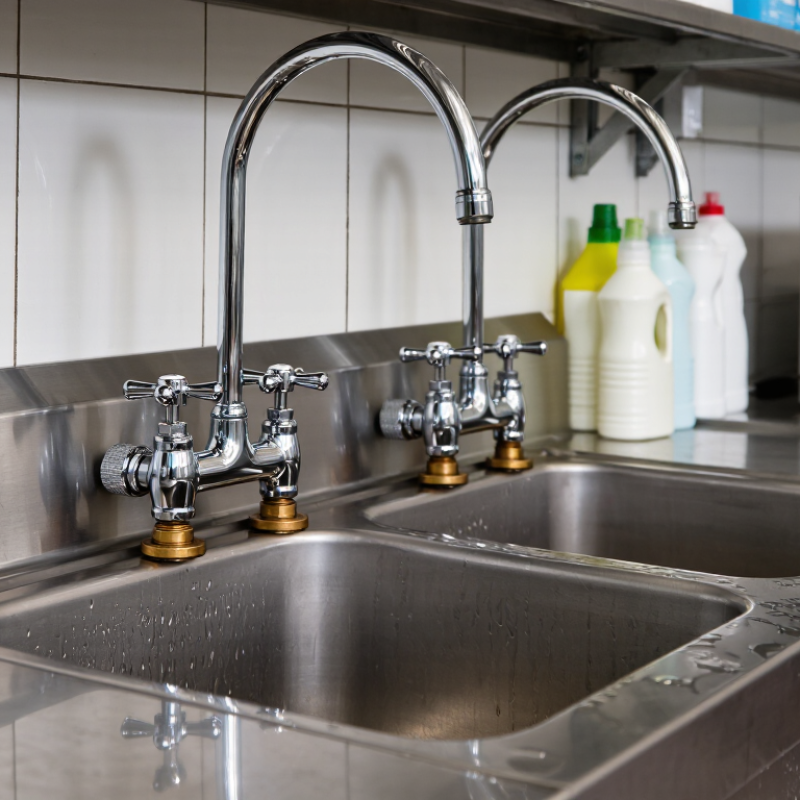
Define the Sink’s Workload and Operating Requirements
Before choosing an Industrial Sink Faucet, define the work it must handle during the busiest hour. Record how often staff use the sink, how many people share it, and what they wash. A prep sink may need a tall spout for filling deep pots. A handwashing station needs easy, quick access.Small distinction. It matters.
Note the required water temperature, expected pressure, and whether users need a steady stream or a spray for rinsing. Check the sink’s depth and width against the spout’s reach. If the water lands too close to the back wall, large items may be awkward to rinse. If it lands too near the edge, splashing can become a daily nuisance. Follow the faucet and sink manufacturers’ installation specifications; site conditions can change what works.
Consider the operating environment, too. Greasy cookware, food particles, or frequent cleaning can affect how easily the faucet stays usable. Staff wearing gloves may find small handles difficult to operate, while a foot control or sensor may not suit every task. I would avoid assuming that hands-free operation is automatically better; it can add maintenance needs and may respond poorly in some settings. Ask staff to demonstrate typical tasks, including filling a stockpot and rinsing a tray. Their routine may reveal a requirement that a specification sheet misses.
Compare Faucet Designs and Control Mechanisms
Choosing an Industrial Sink Faucet starts with the work done at the basin. A wall-mounted design frees counter space and keeps the deck easier to wipe. A deck-mounted faucet can simplify installation when supply lines already rise through the sink. Check the spout reach against the deepest pot you wash; a short reach can leave water splashing onto the floor. Clearance matters, too. Tall cookware needs room beneath the outlet.
Control mechanisms change the feel of daily work. A single-lever handle adjusts temperature and flow quickly, even with wet hands, but it may be awkward when staff wear bulky gloves. Separate cross handles offer clear hot-and-cold control and can be easier to service. Foot pedals keep hands away from the controls during food preparation. They are useful, though staff may need time to adjust. Sensor controls reduce touching, but check power access and cleaning requirements before choosing them. Simple can be better.
Match the faucet to the water system, not just the sink. An Industrial Ro Water Purifiertreats water; the faucet controls its delivery, so confirm that fittings and flow requirements are compatible. Look for replaceable cartridges, sturdy joints, and reachable shutoff valves. A detail I would reconsider is choosing the tallest spout by default. It looks convenient, yet it can send water beyond a shallow basin. Test the spray pattern and handle movement in the actual workspace when possible.
Evaluate Materials, Construction, and Corrosion Resistance
Industrial Sink Faucets face repeated spray, detergent, heat, and knocks from heavy cookware. Material choice matters, but construction matters too. The 2016 NACE International IMPACT study estimated corrosion cost the global economy US$2.5 trillion, or 3.4% of global GDP, using 2013 data. This figure covers many industries, not faucets specifically, but it shows why corrosion deserves attention. For wet, chloride-rich kitchens, compare stainless steel grades and ask for documented material specifications. Grade 316 generally offers better chloride resistance than grade 304, though neither is immune to poor cleaning or stagnant water.
Inspect the details. Smooth welds, solid mounting points, replaceable cartridges, and accessible connections can help a faucet withstand daily use and simplify repairs. A shiny coating may look durable, but finish quality and care instructions matter. A Faucet Hot And Cold Water Sink Kitchen Faucet should also deliver stable flow without loose handles or leaks. Small details matter. One caution: a material label alone cannot prove the whole assembly will resist corrosion.
Tips: Check the product specification sheet, not just the display finish. Ask how the faucet performs around salt, acidic cleaners, and standing water. Look closely at joints and the base; rough edges can trap grime. Match the faucet’s finish and internal components to your actual cleaning routine, then inspect them periodically. It is easy to overvalue appearance. That mistake is worth reconsidering.
Industrial Sink Faucet Materials: Corrosion Resistance
Typical relative corrosion resistance on a qualitative 1–5 scale. Scores are comparative, not standardized test results; actual performance depends on the exact alloy, finish, water chemistry, and maintenance.
Selection tip: 316 stainless steel is generally a strong choice for corrosive or chloride-rich environments; 304 stainless steel suits many general applications. Also inspect body thickness, joint quality, and cartridge construction, since material choice alone does not determine service life.
Check Water Flow, Temperature Control, and Durability
An Industrial Sink Faucet should deliver enough flow for rinsing without turning every task into a splash zone.Check the stated flow rate and pressure requirements, then compare them with your site’s water supply. The U.S. EPA’s WaterSense at Work guide reports that efficient pre-rinse spray valves can save about 7,000 gallons of water annually when replacing older units. That figure applies to spray valves, not every faucet, but it shows why flow deserves scrutiny. A bucket test helps.
Temperature control matters when staff switch between washing hands, rinsing tools, and cleaning greasy cookware.Choose a handle that adjusts smoothly, even with wet hands, and check whether the faucet accepts a mixing valve for steadier output. A clear hot-to-cold range is useful. Still, a good control can feel awkward when the sink is crowded; test the handle’s reach and movement before ordering.
Durability is more than a heavy-looking body. Inspect the spout joint, hose connections, cartridge access, and finish for likely wear points. For potable-water contact, check applicable material certifications, such as NSF/ANSI/CAN 61; plumbing fittings may also be evaluated to ASME A112.18.1. Ask about replacement-part availability and maintenance intervals. Specs can look convincing on paper, but frequent use exposes weak joints fast. That part is easy to overlook.
Assess Maintenance Needs, Safety Standards, and Total Cost
Choose an industrial sink faucet by examining cleaning demands, water use, and repair access. In busy kitchens, mineral scale can clog aerators, while hard-to-reach cartridges add service time. EPA estimates that WaterSense-labeled commercial pre-rinse spray valves can save about 7,000 gallons of water and $1,200 in combined water and energy costs annually. This is a useful comparison, not a savings guarantee for every sink faucet. NIST’s Handbook 135 life-cycle-costing guidance supports comparing purchase, operation, maintenance, and replacement costs over an equipment’s service life. A low purchase price can still become expensive.
For potable-water applications, check whether the faucet’s materials meet NSF/ANSI/CAN 61 requirements and whether lead content is evaluated under NSF/ANSI 372. Confirm the exact model’s documentation; a standard name on a sales page is not enough. If considering a Stainless Steel Sink Gold Faucet, check that its finish tolerates the facility’s cleaning routine. Appearance may matter, but repairability matters more.
Tips: Before ordering, ask who can replace the cartridge, how long common parts take to arrive, and whether the spout reaches every basin corner. Compare water and energy costs using your actual operating hours. Keep the assumptions visible; estimates are imperfect, and even a careful spreadsheet can miss downtime.
How to Choose the Best Industrial Sink Faucet? — Assess Maintenance Needs, Safety Standards, and Total Cost
Comparison of common faucet configurations for commercial and industrial work areas
| Faucet Configuration | Suitable For | Routine Maintenance | Safety and Compliance Checks | Estimated Service Life | Estimated Faucet Price | Estimated Installation | Modeled 10-Year Cost |
| Manual wall-mounted faucet | Utility sinks, janitorial areas, and workstations where a simple, durable setup is preferred. | Clean aerator; check handles, seals, and wall connections for leaks. Replacement parts are generally straightforward. | Confirm wall connections and clearance suit the sink. Verify applicable plumbing requirements and potable-water contact approvals. | About 8–12 years, depending on water quality, usage, and maintenance. | $150–$350 | $150–$300 | $750–$1,250 |
| Commercial deck-mounted single-handle faucet | Food-preparation and general wash stations that need convenient temperature and flow adjustment. | Inspect the cartridge, handle, aerator, and mounting hardware. Clean mineral deposits as needed. | Check that the faucet is suitable for the sink deck and water pressure. Where required, confirm backflow protection and plumbing-fittings compliance. | About 8–12 years, depending on duty cycle and water conditions. | $250–$600 | $200–$400 | $1,000–$1,900 |
| Pre-rinse spray faucet | Commercial dishwashing areas where a flexible spray hose is used for rinsing cookware and utensils. | Inspect the hose, spray head, spring, and connections for wear or leaks. Clean the spray openings and replace worn seals. | Check hose reach and mounting stability. Confirm any required backflow-prevention device and local plumbing-code provisions for the installation. | About 5–10 years; hose and spray-head parts may need replacement sooner in heavy-use settings. | $400–$900 | $250–$500 | $1,850–$3,600 |
Cost assumptions: All figures are illustrative U.S. dollar planning estimates, not supplier quotes. The modeled 10-year cost is calculated as estimated faucet price plus installation plus ten years of routine maintenance and common wear-part allowances: $45–$60 per year for the wall-mounted option, $60–$90 per year for the deck-mounted option, and $120–$220 per year for the pre-rinse option. It excludes water, energy, downtime, major plumbing changes, and full faucet replacement. Actual costs vary by location, labor rates, usage, and water quality.
Compliance note: Requirements depend on the application and jurisdiction. Check local plumbing codes and verify the specific product’s documentation; potable-water contact and lead-content requirements may include NSF/ANSI/CAN 61 and NSF/ANSI/CAN 372, as applicable. Backflow protection requirements should be confirmed for the installation.
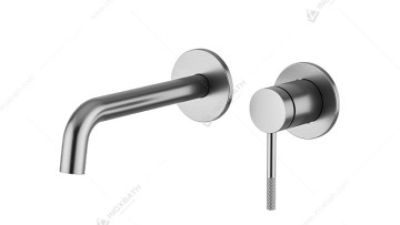
Modern Bathroom Design with a 304 Stainless Steel Concealed Basin Faucet and Ceramic Valve Core
A concealed basin faucet can give a modern bathroom a clean, uncluttered appearance while keeping the focus on the basin and surrounding finishes. The IN-S4034 pairs a 304 stainless steel construction with a ceramic valve core, a combination suited to everyday use and precise handle control. Its concealed installation keeps much of the plumbing out of sight, making it a practical choice for streamlined bathroom layouts. Available finishes include Brushed Steel, Chrome, Matte Black, Brushed Gunmetal, Brushed Gold, and Brushed Rose Gold, offering options for both understated and more expressive interiors.
Water efficiency is also worth considering when choosing a basin faucet. The U.S. Environmental Protection Agency’s WaterSense specifications set a maximum flow rate of 1.5 gallons per minute for qualifying bathroom faucets—at least 30% below the federal standard of 2.2 gallons per minute, while maintaining effective performance. The IN-S4034’s listed details do not specify a flow rate, so buyers can confirm this measurement when planning a water-conscious installation. Paired with a durable-looking metal finish and a ceramic valve core, its concealed design brings a refined, functional touch to a contemporary bathroom.
Conclusion
Choosing the right Industrial Sink Faucet begins with understanding the sink’s workload, how often it will be used, and the conditions it must handle. Compare faucet designs and control mechanisms to find an option that suits daily tasks and is easy to operate. Consider the materials and construction, especially their resistance to corrosion, wear, and frequent cleaning.
Before making a decision, check water flow, temperature control, and expected durability. Confirm that the faucet fits the sink’s configuration and that its installation requirements match the available space and connections. Also consider how easily it can be maintained, whether it meets relevant safety standards, and what its total cost will be over time. Weighing these factors together can help you choose a practical faucet that performs reliably and fits the needs of the workspace.