
Picking a supplier for your Flexi Kitchen Tap back in 2026 isn’t just about comparing prices in their catalogs. Honestly, you want a partner who offers more than just a good deal — somebody who’s got tested products, open and clear communication, and solid after-sales support. Because, let’s be real, a flexible tap needs to handle everyday stuff: moving around, hot water, pressure fluctuations, and constant cleaning. And those things can easily be underestimated if you’re not careful.
If you’ve done this before, you probably know to dig into the supplier’s manufacturing process, what materials they use, and their track record for quality. It’s worth asking if that hose is made from tough, food-safe materials. Don't forget to get the scoop on the cartridge’s performance, how well the finish resists scratches and tarnish, what kind of warranty you’re getting, and whether replacement parts are easy to come by. Sometimes, seeing a sample can tell you way more than photos — things like how stiff it is, how quickly the spray button responds, and how solid the connections feel. And honestly, good suppliers won’t mind these questions one bit.
Certifications are nice, don’t get me wrong, but paperwork alone doesn’t mean they keep the same quality all the time. It’s smart to check if those documents actually match the specific model you’re after and that they meet your market’s standards. If you can, a factory audit, an inspection report, or a traceable batch record will give you much more confidence. Asking for references from established distributors is also a good move—they can tell you how the supplier handles delays, defects, or any issues that come up.
Of course, price still plays a role, but it shouldn’t be the main thing guiding your decision. A super cheap quote might be a red flag — maybe the materials are thinner, testing is cut short, or support isn’t as reliable. No checklist is perfect, either — even the most careful buyer can sometimes miss packaging dents, confusing installation instructions, or the availability of spare parts. That's why I always recommend doing some hands-on testing and having honest chats with the supplier. It helps you see if they really stand by what they’re promising.
This guide is all about helping you compare suppliers more confidently in 2026. It focuses on how reliable their products are, their technical know-how, how well they communicate, their understanding of compliance rules, and how they handle long-term support. Remember, the cheapest or most polished option isn’t always the best — it’s the supplier who can consistently prove they keep their promises that really counts.
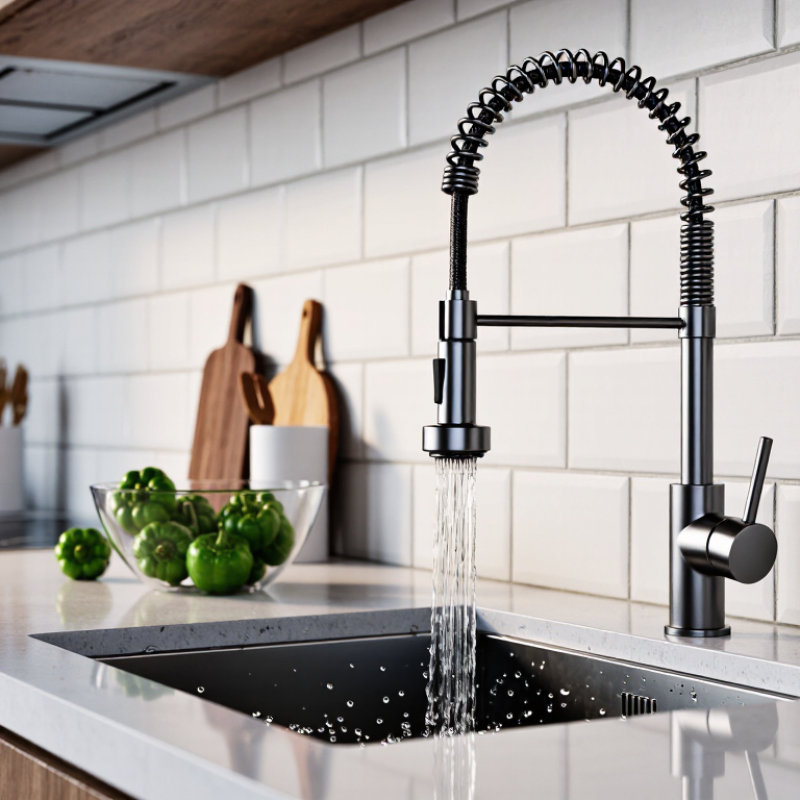
Before comparing suppliers, define how the tap will work in your kitchen. Measure the sink, worktop thickness, and clearance beneath the basin. Note whether you need a pull-out spray, flexible hose, swivel spout, or filtered-water connection. A hose that reaches every corner sounds useful, but check its return mechanism and replacement availability. Small details matter.
Set practical performance targets. Record your preferred flow, water pressure, finish, and daily cleaning routine. The U.S. EPA’s WaterSense guidance sets a 1.5-gallons-per-minute maximum for labelled bathroom faucets; this is not a kitchen-tap requirement, but it offers a useful efficiency reference. Ask suppliers for tested flow-rate data under stated pressure conditions, plus cartridge-cycle and hose-durability test results. Confirm which standards and certifications apply in your market. Do not rely on vague claims such as “high pressure” or “long life.” They tell you little.
Write down what matters most: smooth handle movement, a stable spray head, easy access to spare parts, or a finish that hides water spots. Include the exact search phrase Kitchen Sink Gold Tap Pull Out Kitchen Mixer Tap in your supplier brief if that is the product type you are sourcing. Gold finishes vary in tone and coating method, so request a physical sample beside your sink. I would also question whether every feature is necessary. More options can mean more parts to maintain.
How to Choose a Flexi Kitchen Tap Supplier in 2026?
Check a supplier’s experience, certifications, and production capacity before discussing price. Ask how long they have made flexible Kitchen Taps and request examples of comparable orders. A useful audit may include factory photos, material specifications, and inspection records for hose connections, cartridges, and finishes. ISO’s 2022 Survey recorded more than 1.2 million valid ISO 9001 certificates worldwide. This shows how widely quality-management certification is used, but an ISO 9001 certificate alone does not prove that a particular tap meets your requirements. Check its scope, issuing body, and validity.
Tips: Request relevant product test reports and verify their issuing laboratory. Ask for a recent production schedule, monthly capacity, and defect-handling process. Have the supplier explain how it checks each batch. Specific answers matter. A polished brochure is not evidence of stable output.
Capacity deserves a practical check. Compare the quoted lead time with the supplier’s available lines, staffing, and component inventory. Ask whether flexible hoses and replacement parts come from the same production system or outside vendors. For a sample order, inspect the tap’s hose movement, joints, and packaging—not just its appearance on a desk. I would not rely on one successful sample; production batches can vary. Record agreed tolerances and inspection steps in writing before confirming volume.
A Flexi Kitchen Tap is handled every day, so compare more than its shape. Check the body material, finish, and hose construction. Solid brass bodies are often chosen for their weight and corrosion resistance, while stainless steel can offer a clean, durable surface. Ask for material specifications rather than relying on a polished product photo. Feel the handle, too. A loose lever may become irritating after months of use.
Design should suit the sink and the people using it. A high-arched spout can clear tall pots, but it may splash in a shallow basin. Pull-down and pull-out hoses offer different reach; test whether the spray head returns smoothly and the hose retracts without snagging. Useful functions include a clear switch between stream and spray, a steady swivel, and accessible replacement parts. Simple is often better. Extra modes can look appealing, yet add little if they are awkward to clean.
Compare suppliers by asking for flow-rate details, finish-care guidance, warranty terms, and spare-part availability in writing. For custom orders, confirm hose length, handle position, finish samples, and packaging before production. Request a drawing or sample where possible. A small mismatch can matter. One detail buyers sometimes overlook is installation clearance beneath the sink, especially around hoses and filters. Even careful checks cannot predict every kitchen’s quirks, so allow space for adjustment and keep the agreed specifications on record.
When choosing a Flexi Kitchen Tap supplier in 2026, ask for measured flow-rate data, not just “water-saving” claims. In the United States, federal rules generally cap kitchen-faucet flow at 2.2 gallons per minute at 60 psi, under Department of Energy standards. Compare test results at realistic pressure, since a tap may feel weak in a home with lower pressure. A removable aerator should be easy to clean. Small detail, big difference.
Safety depends on materials and documented testing. Ask whether wetted components have been evaluated to NSF/ANSI/CAN 61 for drinking-water health effects and NSF/ANSI 372 for lead content. These standards address different concerns; one certificate does not automatically cover both. Check the certificate’s scope and the exact product model. A “compliant” label alone is thin evidence. The supplier should also explain hose materials, connector compatibility, and replacement-part availability.
Flexi hoses bend repeatedly beneath the sink, where leaks can go unnoticed. Request pressure-cycle, burst, and corrosion test information, preferably tied to ASME A112.18.1/CSA B125.1 requirements. Inspect hose crimps and fittings, and ask about warranty exclusions for installation or water conditions. A Single Lever Kitchen Mixer Kitchen Sink Faucet should operate smoothly without wobbling or dripping after repeated use. I would still want real test records; polished product photos prove very little.
When choosing a Flexi Kitchen Tap supplier in 2026, compare the landed price, not just the unit quote. Ask for separate costs for the tap, flexible hoses, packaging, samples, and freight. Check whether the stated minimum order applies per model, finish, or shipment. A low price can become less attractive if you must buy several finishes to meet the minimum. Small details matter. For product checks, request a specification sheet covering material, hose length, connection size, and testing procedures. A “Sink Tap Kitchen Stainless Steel” listing alone does not confirm the steel grade or component quality.
Lead times need the same careful review. Ask for production time, inspection time, and shipping time as separate figures, then confirm what happens if a component is delayed. UNCTAD’s Review of Maritime Transport 2024 reported that global maritime trade grew by 2.4% in 2023 and forecast 2.6% growth for 2024, while disruptions continued to affect routes and costs. That context makes a written dispatch window more useful than a casual estimate. I would still build in a buffer; even good suppliers cannot control every port delay.
Payment terms can reveal how much risk each side carries. Confirm deposit size, balance due date, accepted payment methods, and whether charges apply to changes or cancellations. Match payments to clear milestones, such as approved samples and completed inspection. Keep every commitment in the purchase order. It sounds obvious, but I have seen buyers rely on a reassuring email and later discover that the final invoice used different packaging or freight terms.
Review Pricing, Minimum Orders, Lead Times, and Payment Terms
Use this comparison as a purchasing-planning guide, not as a quotation or guaranteed market price. The figures below are broad indicative ranges for standard products and common export orders; actual terms depend on material, finish, certification, customization, destination, and order volume. Request current written quotations from suppliers before making a decision.
| Comparison area | Indicative 2026 planning benchmark | What to confirm with the supplier | How to assess the offer |
|---|---|---|---|
| Unit pricing | Standard pull-out or flexible-neck Kitchen Taps are commonly quoted at approximately US$20–70 per unit for bulk, factory-direct orders. Premium finishes, upgraded cartridges, heavier construction, and added accessories can raise the price substantially. | Ask for prices at several order quantities and specify the body material, finish, hose, cartridge, included accessories, packaging, and delivery term. | Compare like-for-like specifications. A low unit price may exclude accessories, testing, packaging upgrades, freight, or import costs. |
| Sample cost | A sample may be charged at the normal sample price or at a higher one-off rate; courier charges are often billed separately. Some suppliers credit the sample charge against a qualifying bulk order. | Confirm the sample specification, dispatch date, courier cost, refund or credit conditions, and whether the production order will match the approved sample. | Evaluate the actual finish, hose flexibility, spray functions, cartridge operation, and packaging before approving production. |
| Minimum order quantity (MOQ) | Standard stock models may be available from a few dozen units. Custom finishes, private packaging, or bespoke components can require several hundred units or more. | Request separate MOQs for stock models, custom colours, logo application, and customized packaging. Ask whether mixed models or finishes can be combined. | Choose an MOQ that fits forecast demand and storage capacity. Confirm whether the stated MOQ applies per model, finish, or total shipment. |
| Production lead time | A standard stocked item may be ready in roughly 1–3 weeks. A made-to-order or customized order often takes about 4–8 weeks after specifications and artwork are approved. | Confirm when the production clock starts, whether sample approval is required, and how holidays, material shortages, or inspection findings affect the schedule. | Ask for a dated production schedule and written notice requirements for any delay. Distinguish production time from shipping and customs transit time. |
| Shipping and delivery | Transit time varies widely by route and method: air freight is generally faster than ocean freight, while port handling and customs clearance add additional time. | Identify the quoted Incoterm and named location, packing dimensions, shipment method, estimated dispatch date, and responsibility for freight, insurance, and import clearance. | Compare the total landed cost and delivery window, not just the factory price or estimated vessel transit time. |
| Payment terms | For an initial export order, a common arrangement is a deposit before production with the balance due before shipment or against agreed shipping documents. The exact deposit and balance split is negotiable. | Confirm currency, bank charges, payment milestones, accepted payment methods, and whether the balance is due before dispatch, after inspection, or under a documented trade-finance arrangement. | Put every milestone in the purchase contract. Use a payment method and inspection process appropriate to the order size and your risk tolerance. |
| Quality and compliance | Requirements vary by destination market and product specification; no single certificate guarantees suitability in every country. | Request current test reports and documents relevant to the destination, plus material specifications, warranty terms, and traceability information. | Verify documents with the issuing body where practical. Make acceptance criteria and remedies for defects part of the written agreement. |
| Warranty and after-sales support | Warranty periods and coverage differ by supplier and market. Exclusions may apply to installation, water conditions, wear parts, and commercial use. | Ask for the written warranty, spare-parts availability, claim process, response time, and responsibility for replacement shipping. | Prefer clear, documented coverage and accessible replacement parts over verbal assurances. |
Practical shortlist rule: compare at least three written offers using the same product specification, quantity, Incoterm, inspection requirements, and delivery destination. Treat all benchmark figures as indicative until confirmed in a current supplier quotation.
When choosing a flexi kitchen tap supplier in 2026, ask how quality is checked before products leave the factory. A reliable process should cover hose flexibility, connection fit, leak testing, and finish consistency. Request inspection records or a clear description of sampling procedures.
Small details matter. A stiff hose or uneven coating can become obvious after installation, not during a quick product photo review. If you are sourcing a Kitchen Pull Out Tap Mixer , confirm that the pull-out hose retracts smoothly and that replacement parts are available.
Packaging deserves a closer look. Ask for photos of the tap, hose, and fittings packed together, then check whether parts are separated to prevent scratches or crushed connectors. Packaging that survives a warehouse tour may still fail during a long shipment. That is easy to overlook.
Compare warranty terms in writing, including coverage periods, exclusions, and the process for reporting a defect. Clear terms are more useful than broad promises. Ask who handles after-sales questions, how quickly replies are typically sent, and whether troubleshooting guidance is available. You may not need support often, but a delayed answer can hold up an installation. I would also check these details twice; supplier documents can be clear in places and surprisingly vague in others.
Measure the sink, worktop thickness, and space beneath the basin. Check hose clearance carefully. Leave room for adjustment.
Consider a pull-out spray, swivel spout, flexible hose, or filtered-water connection. Choose features that match daily tasks. More options can mean more maintenance.
Ask how far the hose reaches and how smoothly it returns. Check for snagging, weak retraction, and replacement availability. A stable spray head matters.
Request clear specifications for the body, finish, hose, and fittings. Solid brass may feel heavy and resist corrosion. Stainless steel offers a clean, durable surface.
Request tested flow rates under stated pressure conditions. Do not rely only on “water-saving” or “high-pressure” claims. Compare results at realistic household pressure.
Ask for certificates covering drinking-water contact and lead content. Check the certificate scope and exact product model. One certificate may not cover every concern.
Request pressure-cycle, burst, and corrosion test records. Inspect hose crimps and connectors closely. Leaks can hide in dark cabinets.
Confirm hose length, handle position, finish sample, packaging, and installation clearance. Request a drawing or physical sample before production. Small mismatches become expensive.
Place a physical finish sample beside the sink. Gold tones and coating methods can vary noticeably. Choose a surface that hides water spots if cleaning time matters.
No. Photos show appearance, not cartridge life, hose strength, or leakage performance. Ask for test records and written warranty terms. I would still question impressive claims.
Choosing the right Flexi Kitchen Tap supplier in 2026 starts with clearly defining your project’s requirements, including the tap’s intended use, preferred design, required functions, and customization needs. Compare suppliers’ industry experience, certifications, and production capacity to determine whether they can meet your specifications and order volume reliably. Assess materials and construction, and look for products designed to balance water efficiency, user safety, and long-term durability.
Before making a decision, compare pricing alongside minimum order quantities, production lead times, and payment terms. Ask how the supplier manages quality control, protects products during packaging and shipping, and handles warranty claims and after-sales support. A careful review of these factors can help you choose a dependable supplier whose products, service, and delivery arrangements suit your needs—not just the lowest quoted price.