
inquiry1
If you want the latest catalog, design inspiration and more, please feel free to contact us
0%

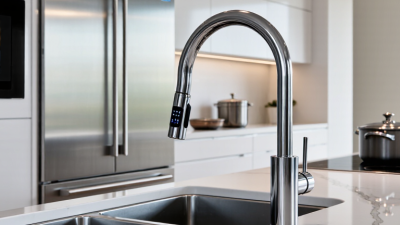
When it comes to choosing a Kitchen Tap, especially for folks shopping globally, it’s no longer just about the shiny finish or the price tag. These days, aSmart Kitchen Tap can do a lot more—think touch controls, voice commands, filtered water options, measured dispensing, or even app controls. All these features are pretty handy, especially when your hands are wet or full and you don’t want to fumble with knobs. Sometimes, it’s the little things that count—like a steady stream of water, easy-to-understand controls, or a handle you can grab easily. For instance, measured dispensing can really come in handy when you're trying to fill the kettle without constantly guessing how much water you’ve poured. Sensors are another cool feature—they can reduce touching the handle when you're chopping or preparing food. But here's the thing: if the sensor’s slow to respond, it can get pretty frustrating, too.

This guide breaks down ten common types of Smart Kitchen Taps and helps you figure out where each one might be a good fit. We look at aspects like how they’re installed, power needs, filtration options, how responsive their sensors are, how easy they are to maintain, and whether they work with your local plumbing setup. It’s really important to double-check the specs because connection sizes, electrical requirements, and support services can differ depending on where you live. No product page can tell you everything, so don’t hesitate to ask questions—like how easy it is to replace filters, whether the tap still works during a network outage, or if replacement parts are readily available nearby. The best choice actually depends on your kitchen habits, your budget, and what fitting you already have, rather than just tech features. Some claims sound pretty impressive at first, but honestly, it’s hard to really tell how useful they’ll be until you’ve used them daily. So, be honest with yourself about that. Use this guide as a practical starting point, and then double-check details with the manufacturer or a trusted installer before making your final decision.
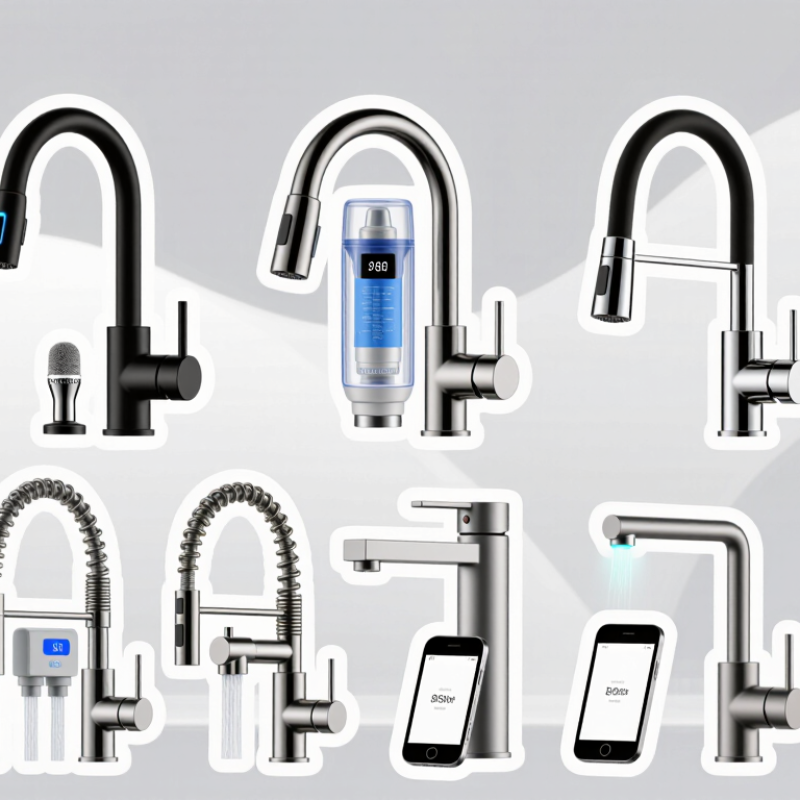
Top 10 Smart Kitchen Tap Types for Global Buyers

How Smart Kitchen Taps Differ from Conventional Kitchen Faucets

Top 10 Smart Kitchen Tap Types for Global Buyers

Smart Kitchen Taps differ from conventional kitchen faucets through sensors, electronic valves, and connected controls. The ten common types include touchless, touch-activated, voice-controlled, temperature-display, flow-monitoring, filtered-water, instant-hot, chilled-water, pull-down sensor, and leak-alert taps. Conventional faucets depend on manual handles and mechanical cartridges. Smart models can start water with a wave, stop flow during food preparation, or show temperature digitally. This can improve hygiene and reduce unnecessary contact. However, “smart” does not always mean safer. A sensor may misread a moving bowl, while a digital display can lose accuracy.

The U.S. Environmental Protection Agency’s WaterSense specification limits certified Kitchen Faucets to1.5 gallons per minute, compared with the federal 2.2-gpm maximum. That figure measures efficiency, not intelligence. A connected tap can still waste water if its sensor reacts slowly or its default flow remains too high. Buyers should check local voltage, water pressure, replacement filters, plumbing connections, and certification requirements before purchase. In regions with hard water, mineral buildup may weaken touchless detection. In areas with unstable electricity, manual override matters. Global buyers should also compare temperature units, language support, and data-privacy settings. The convenience is real. The installation is not always simple.

Core Technologies Used in Smart Kitchen Taps

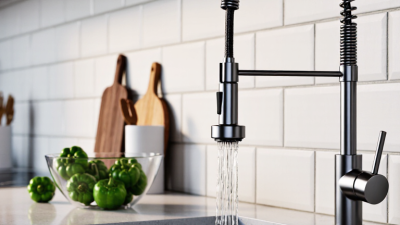
A Smart Basin Faucet uses several technologies to control water with less hand contact. Its infrared sensor detects movement near the spout. A short hand wave can start or stop the flow. This is useful when handling raw vegetables, dough, or greasy utensils. The sensor must respond quickly, but not react to every shadow.

Electronic valves regulate the water path. A solenoid valve opens and closes within seconds, while a flow limiter controls output. Some models use thermostatic mixing technology to keep water temperature stable. This helps prevent sudden hot bursts during busy kitchen work. Temperature sensors add another safety layer. Yet sensor accuracy can decline when mineral deposits cover the valve area.

Power systems also affect daily reliability. Battery models simplify installation, while wired systems provide steady operation near a sink. Some faucets include touch control, voice connection, or mobile monitoring. These features can track usage, but they are not always necessary. A weak network may delay commands. That is frustrating during cooking. Good designs use manual controls as a backup.

From an installation perspective, sealed electronics and flexible connectors matter greatly. Moisture protection should match the sink environment. Buyers should check water pressure, fitting size, battery access, and cleaning requirements before purchase. In real kitchens, convenience depends on small details. A brilliant feature means little if the sensor misses a wet hand.

Ten Smart Kitchen Tap Types by Control Method and Function

Smart Kitchen Taps now combine water control, hygiene, and flexible installation. Grand View Research estimates the global smart faucet market will expand strongly through 2030, supported by sensor technology and connected homes. For global buyers, control method matters as much as appearance.

The first group includes touchless infrared taps, touch-activated taps, and voice-controlled models. Infrared sensors suit busy kitchens because users avoid touching the handle with raw-food hands. Touch controls work well when hands are wet but may need regular cleaning. Voice control adds convenience, although accuracy can fall beside running water. There is room for doubt here. Smart features are not always practical.

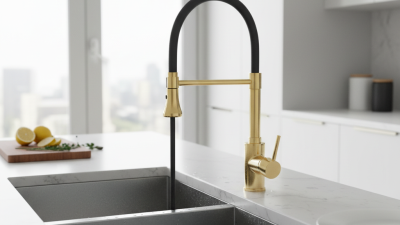
The second group focuses on function: pull-out spray taps, pull-down taps, filtered-water taps, boiling-water taps, temperature-display taps, and flow-limiting taps. A Kitchen Sink Gold Tap Pull Out Kitchen Mixer Tap can combine metallic style with reach for rinsing deep cookware. The International Energy Agency reports that water heating remains a major household energy use, so instant temperature control may reduce unnecessary running time. The U.S. Environmental Protection Agency also identifies efficient faucets as a way to reduce household water use, especially when flow control is built in. Buyers should check local electrical, plumbing, and safety requirements. Smart does not mean maintenance-free. Sensor batteries, filters, software, and replacement cartridges still require planning.

Top 10 Smart Kitchen Tap Types for Global Buyers

Ten smart kitchen tap types categorized by control method and primary function. The chart compares representative maximum flow rates commonly found in residential kitchen tap specifications.

Representative values are shown in litres per minute. Actual flow depends on local regulations, aerators, water pressure, filtration systems and safety settings. Boiling-water and filtered-water outlets typically use separate lower-flow channels.

Mounting Styles and Plumbing Compatibility

Top 10 Smart Kitchen Tap Types for Global Buyers

Mounting Styles and Plumbing Compatibility

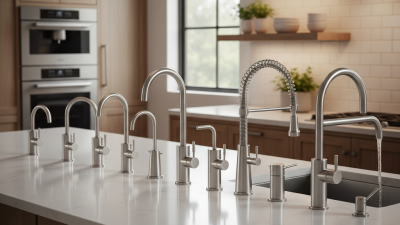
Smart kitchen taps are not defined by sensors alone. Mounting style often determines installation success. Deck-mounted models fit most countertops, while wall-mounted taps require hidden pipes and accurate height planning. Single-hole designs look clean. Three-hole models need compatible spacing and cover plates. Bridge taps suit traditional layouts, but their exposed connections require careful alignment.

The 2024 U.S. Houzz Kitchen Trends Study reported that 73% of renovating homeowners upgraded their kitchen faucet. This suggests strong replacement demand, but compatibility remains easy to overlook. A Single Lever Kitchen Mixer Kitchen Sink Faucet usually needs one mounting hole and separate hot and cold supply lines. Check whether the connection uses 3/8-inch or 1/2-inch fittings. International plumbing standards vary. Adapters may be necessary, but extra joints can create leak risks. Touchless and voice-controlled models also need batteries, electrical access, or both.

Tips: Measure the hole diameter, hole spacing, countertop thickness, and backsplash clearance before ordering. Confirm water pressure requirements and hose length. A pull-down spray head may collide with a low window. A wall-mounted tap may look elegant, yet relocation costs can be substantial. Smart does not always mean suitable. No product chart replaces measuring your own sink. The NKBA 2024 Kitchen Trends Report identifies touchless operation as an emerging kitchen preference, but users should still question maintenance, battery access, and manual override quality.

Power, Connectivity, and Water-System Requirements

Smart kitchen taps differ less by appearance than by power, connectivity, and water-system demands. The main types include touchless, touch-control, voice-enabled, app-connected, temperature-display, filtered-water, boiling-water, chilled-water, sparkling-water, and water-monitoring taps. Each type needs a realistic installation plan, not just a stylish countertop.

Touchless and touch-control models usually require batteries or a low-voltage adapter. Voice and app-connected taps need stable Wi-Fi, while some operate through Bluetooth. Keep the control unit away from leaks and heat. A residual-current device may be required by local electrical standards. Buyers should confirm voltage, plug type, and electrician access before ordering. Small details matter.

Water requirements vary sharply. Filtered systems need cartridge space, replacement access, and compatible pressure. Boiling or chilled models may need dedicated power, ventilation, and drainage. Check hot and cold inlet sizes, flow pressure, faucet-hole dimensions, and backflow protection. An under-sink unit can become crowded quickly. I have seen installation plans fail because cabinet space was measured around pipes, not equipment. Product sheets also use different flow-rate conditions, so comparisons can mislead. Global buyers should request certified test data and local service information. Connectivity sounds impressive, but a tap that loses Wi-Fi during a firmware update may still need manual control. That practical fallback is easy to overlook.

Key Factors for Comparing Smart Taps Across Global Markets

A smart tap can behave differently when water pressure, plumbing, and power supply change. Compare its operating range with local conditions, not just its feature list. A sensor that responds well at steady pressure may hesitate when supply fluctuates. Test activation with wet hands and a small saucepan nearby. That detail matters. Check whether the tap uses batteries, mains power, or both, and how easily parts can be replaced. For buyers comparing Sink Tap Kitchen Stainless Steel options, inspect material specifications and finish-care guidance. “Stainless steel” alone does not explain grade, coating, or resistance to water spots.

Connection sizes and installation methods also vary across markets. Confirm the inlet dimensions and available adapters before purchase; a mismatch can delay installation. Look for clear flow-rate data, temperature controls, and instructions written for the intended market. Local water quality can affect filters and maintenance intervals, so request service guidance rather than assuming one schedule fits every home. Check warranty terms and access to replacement cartridges, too. A tap may offer voice control or app settings, but those features are less useful if connectivity is unreliable. I would weigh dependable manual operation more heavily, though that preference may not suit every kitchen. Compare the details that affect daily use, not only the most visible technology.

Top 10 Smart Kitchen Tap Types for Global Buyers - Key Factors for Comparing Smart Taps Across Global Markets

Rank Smart Tap Type Main Control Method Typical Power Supply Typical Flow Rate Common Installation Best-Suited Applications Key Global Market Considerations Main Advantages Typical Limitations
1 Infrared Touchless Tap Infrared hand detection with automatic start and stop Battery or low-voltage mains adapter Approximately 4–8 L/min Single-hole deck mounting; usually requires a mixer valve or separate temperature control Hygiene-focused homes, apartments, healthcare facilities, and public-facing kitchens Check sensor performance under different lighting conditions, battery availability, water-pressure requirements, and local plumbing standards Reduces touch points, limits unnecessary running water, and is easy for children or users with limited mobility Sensor activation can be affected by reflective surfaces, incorrect positioning, or very low water pressure
2 Touch-Activated Smart Tap Touching the spout or body with a hand, wrist, or forearm Battery or low-voltage mains adapter Approximately 5–9 L/min Single-hole or three-hole kitchen installation, depending on the model Family kitchens where users want hands-free operation without a mobile application Evaluate electrical isolation, coating durability, compatibility with local earthing practices, and ease of battery replacement Convenient when hands are dirty and less sensitive to ambient light than infrared models Wet or insulated hands may not trigger the control reliably; users must avoid touching the tap with sharp objects
3 Voice-Controlled Smart Tap Voice commands combined with manual controls or a sensor Usually mains powered with a backup manual function Approximately 5–8 L/min Single-hole mounting with a control module located under the counter Connected homes, accessibility-focused kitchens, and users who need measured water dispensing Language support, internet availability, privacy requirements, cloud-service continuity, and regional electrical certification are important Allows hands-free start, stop, and measured-volume dispensing when supported Depends on compatible voice platforms, network connectivity, and accurate speech recognition in noisy kitchens
4 Wi-Fi or App-Connected Tap Mobile application, programmable controls, and manual override Usually mains powered; some controls use replaceable batteries Approximately 5–9 L/min Single-hole deck mounting with an under-counter controller Smart-home projects, rental-property monitoring, and households wanting usage notifications Compare wireless frequency regulations, data protection practices, app language support, router compatibility, and offline operation Can provide schedules, usage records, alerts, remote status monitoring, and personalized presets Higher complexity, software updates, cybersecurity concerns, and possible loss of advanced functions if cloud services change
5 Digital Temperature-Display Tap Electronic temperature display with manual, touch, or sensor control Battery or low-voltage power supply Approximately 5–8 L/min Single-hole installation; may include a pull-out or fixed spout Homes with children, older users, and kitchens where precise temperature awareness is useful Check temperature measurement accuracy, display visibility, low-battery behavior, and compliance with local hot-water safety requirements Provides a clear visual indication of water temperature and can help reduce accidental exposure to hot water The display does not necessarily control temperature; the sensor or battery may require periodic replacement
6 Smart Pull-Down or Pull-Out Tap Manual handle combined with a sensor, touch control, or timed shut-off Battery or low-voltage mains adapter Approximately 5–9 L/min Single-hole deck mounting with a flexible hose and docking weight General household kitchens, compact worktops, and food-preparation areas Review hose length, docking reliability, counter thickness, spray-pattern requirements, and replacement-part availability Combines familiar manual temperature control with extended reach and hands-free activation More moving parts can increase wear; hose routing and docking performance depend on cabinet space
7 Water-Filtering Smart Tap Dedicated filtered-water lever, sensor, or electronic dispensing control Usually battery powered for monitoring; filtration may operate without electricity Approximately 2–4 L/min for filtered water Separate filtered-water outlet or combined multi-function tap Urban homes, offices, hospitality areas, and markets where point-of-use filtration is common Filter certification, replacement availability, local water contaminants, cartridge life, and disposal requirements must be verified Can monitor filter life, reduce reliance on bottled water, and provide a dedicated drinking-water outlet Requires regular cartridge replacement; filtration performance depends on the selected filter and incoming water quality
8 Boiling, Chilled, or Sparkling Water Tap Electronic touch control, safety lock, and dedicated appliance system Mains electricity required Approximately 1.5–3 L/min for treated or heated water Multi-function tap connected to an under-counter heating, cooling, carbonation, or filtration unit Premium residential kitchens, offices, hospitality, and convenience-oriented developments Electrical safety, ventilation space, heat discharge, pressure compatibility, energy consumption, and local installation rules are critical Provides on-demand treated water while saving counter space and reducing separate countertop appliances Higher purchase and installation cost, standby energy use, maintenance requirements, and limited output capacity
9 Foot- or Knee-Activated Smart Tap Foot pedal, knee sensor, or under-counter proximity control Mechanical, battery powered, or low-voltage mains powered Approximately 4–8 L/min Standard deck-mounted tap with a separate floor, cabinet, or under-counter actuator Food-preparation areas, accessibility-focused kitchens, medical environments, and commercial workspaces Assess actuator placement, cleaning procedures, slip resistance, accessibility requirements, and compatibility with local plumbing layouts Allows operation without hand contact and can be useful when both hands are occupied Requires suitable cabinet or floor geometry; accidental activation is possible if the control is poorly positioned
10 Commercial High-Use Sensor Tap Industrial-grade infrared sensor with adjustable run time and safety shut-off Battery, mains adapter, or hardwired low-voltage supply Approximately 5–12 L/min, depending on the aerator and application Heavy-duty deck or wall mounting with serviceable valves and sensor components Commercial kitchens, institutional facilities, restaurants, and high-traffic food-service areas Verify duty cycle, spare-part access, vandal resistance, water-pressure range, hygiene rules, and local commercial plumbing codes Designed for frequent use, consistent shut-off, easier cleaning, and reduced cross-contamination May be oversized for domestic kitchens and usually has a higher installation and maintenance cost

Note: Flow rates and power configurations are typical market ranges rather than universal specifications. Actual performance depends on the tap design, aerator, water pressure, control system, and local installation conditions.

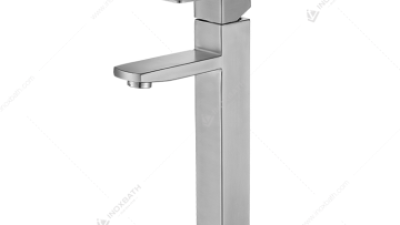
Smart Water Saving: Choosing a 304 Stainless Steel Metered Faucet for Bedroom Basins

A 304 stainless steel metered faucet is a practical upgrade for bedroom basins, combining controlled water use with a clean, contemporary appearance. Designed to release water for a preset period, it helps prevent taps from being left running unnecessarily during handwashing, shaving, or other daily routines. The durable stainless steel construction offers reliable resistance to corrosion and everyday wear, making it suitable for long-term bathroom use.

Item No. IN-H2007-1 is available in several finishes to complement different bedroom styles, including Brushed Steel, Chrome, Matte Black, Brushed Gunmetal, Brushed Gold, and Brushed Rose Gold. Whether the basin area features a minimalist, industrial, classic, or warm decorative scheme, the finish options make it easier to coordinate the faucet with surrounding fixtures and accessories.

With its straightforward metered operation, this faucet supports more mindful water consumption without compromising convenience. Its refined form fits neatly on bedroom basins, while the solid 304 stainless steel body provides a dependable solution for modern residential bathrooms, guest rooms, and other spaces where efficient water management matters.

FAQS

How does a touchless kitchen tap detect your hand?

An infrared sensor detects movement near the spout. A brief hand wave can start or stop the water. It may react poorly to shadows or miss a wet hand.

How does a smart tap control water temperature?

Electronic valves regulate flow, and some models mix hot and cold water automatically. Temperature sensors can help prevent sudden changes. Mineral buildup may reduce their accuracy.

What power options are available?

Some taps use batteries, while others connect to a low-voltage adapter or mains power. Check battery access and electrical requirements before installation. Small details matter.

Do connected taps need Wi-Fi?

App-connected and voice-enabled models may need stable Wi-Fi. Some use Bluetooth instead. Weak connections can delay commands, so manual controls are useful.

What should I measure before buying?

Check inlet sizes, water pressure, faucet-hole dimensions, and available cabinet space. Measure around pipes and equipment, not just the empty cabinet. Easy to miss.

Do filtered or chilled-water taps need extra space?

Yes. Filters need room for cartridges and replacement access. Chilled or boiling-water systems may also need power, ventilation, and drainage.

How can I compare smart taps for my home?

Match the tap’s pressure range and connection sizes to your plumbing. Compare flow-rate data under similar test conditions. A feature list can be misleading.

What maintenance details should I check?

Ask about cleaning, filter replacement, spare parts, and local service. Water quality affects maintenance needs. One schedule may not fit every home. I might still favor simpler controls.

Conclusion

This guide explains how a Smart Kitchen Tap differs from a conventional faucet by combining water delivery with intelligent control, automation, and user-focused functions. It introduces core technologies such as touchless sensors, digital temperature control, voice or app operation, flow monitoring, safety shutoff, and water-saving systems. The article then presents ten Smart Kitchen Tap types organized by control method and practical purpose, helping buyers understand the differences between sensor-activated, touch-control, voice-enabled, programmable, filtered-water, boiling-water, and multifunction models.

It also reviews mounting styles, including deck-mounted and wall-mounted designs, as well as plumbing compatibility for different kitchen layouts. Power options, connectivity, water pressure, filtration, and hot-and-cold supply requirements are discussed to support reliable installation. Finally, the guide highlights key comparison factors for global markets, including usability, safety, energy efficiency, maintenance, local water conditions, installation standards, and long-term value.
Liam

Liam

Liam is a dedicated marketing professional at INOXBATH, specializing in producing high-quality products since 2013. With a deep understanding of the company's core business, he plays a vital role in enhancing brand visibility through informative and engaging blog articles that frequently update the......
Previous How to Choose a Flexi Kitchen Tap Supplier in 2026?