
inquiry1
If you want the latest catalog, design inspiration and more, please feel free to contact us
0%

So, the Stainless Steel Kitchen Faucetmarket is growing—thanks largely to renovation work, hospitality demand, and new residential construction. Grand View Research actually flags Kitchen Faucets as a growing segment within the global plumbing fixtures industry. And Fortune Business Insights sees steady growth in the broader faucets market too, driven by water-saving designs and folks upgrading their kitchens. The figures don't match. And honestly? That matters.

Okay, so this guide isn't here to hype anyone up. It takes a look at ten suppliers based in China and sizes them up using practical sourcing criteria—not whatever their promo pages claim. That includes things like factory experience, the grade of stainless steel, cartridge quality, surface finishing, production capacity, export history, and quality-control systems. If you're after a dependable Stainless Steel Kitchen Faucet, it should have consistent welding, a handle that moves smoothly, steady water flow, and clean threads around the aerator. Honestly, it's usually the little details that reveal weak manufacturing.

So, Mordor Intelligence is pointing to growing interest in bathroom and kitchen fixtures that are durable and resist corrosion. That kind of lines up with using 304 stainless steel for a lot of indoor applications—and if you're in a coastal or high-salt area, 316 stainless steel might be the better fit. Still, just relying on material labels doesn't really tell you much. Before placing big orders, buyers should ask for mill certificates, third-party test reports, and product samples. Companies like JOMOO, LIXIL, T&S Brass, and a bunch of other specialized Chinese manufacturers each bring something different to the table—whether that’s design, customization, or high-volume production. So the ranking in this article is a helpful starting point, not the final word. Supplier websites? Yeah, they can sometimes oversell what they can do. And public data isn’t always complete, either. That’s why factory audits, sample testing, and clear warranty terms still matter. Even experienced buyers miss stuff from time to time.
China Top 10 Stainless Steel Kitchen Faucet Suppliers

China’s Stainless Steel Kitchen Faucet Manufacturing Landscape

China’s stainless steel Kitchen Faucet manufacturing landscape is broad, export-oriented, and highly competitive. Grand View Research estimates the global Kitchen Faucets market reached about USD 10 billion in 2023, with continued growth expected through 2030. This demand supports China’s dense supplier network, especially in Guangdong, Zhejiang, and Fujian.

Production capability varies sharply. Leading factories usually operate CNC machining, polishing, assembly, and water-pressure testing lines under one roof. Stainless steel grades should be verified, not assumed. Many buyers request SUS 304, while lower-cost products may use mixed materials. A mill certificate and material composition test can reveal the difference.

Small details matter.

The China National Hardware Association and international plumbing standards emphasize leakage control, durability, and safe material contact. Reliable suppliers normally provide pressure-test records, salt-spray results, cartridge-cycle data, and batch traceability. Buyers should also check whether testing follows recognized standards, such as NSF/ANSI 61 or applicable European requirements. Production scale alone proves little. A large workshop can still have weak inspection discipline.

Industry estimates are useful, but not perfectly consistent. Market reports often classify stainless steel together with other faucet materials, making direct comparisons difficult. That limitation deserves attention. Factory visits, sample disassembly, and repeated pre-shipment inspections remain practical ways to evaluate China’s top stainless steel Kitchen Faucet suppliers.

How the Top 10 Chinese Faucet Suppliers Are Selected

Selecting China’s top 10 stainless steel Kitchen Faucet suppliersrequires more than checking online rankings. Grand View Research estimates that the global Kitchen Faucet market reached aboutUSD 6.2 billion in 2022, with steady growth expected through 2030. This growth increases supplier competition and makes evidence essential. We assess factory experience, material control, production capacity, export records, and after-sales systems. Stainless steel grade, cartridge durability, salt-spray results, and leak testing receive particular attention.

Supplier data should be verified through factory audits, product samples, and independent laboratory reports. ISO Survey data identifies China as the world’s largest source of ISO 9001 certificates, but certification alone does not prove faucet quality. We compare audit dates, test standards, defect rates, and delivery performance. UN Comtrade trade data also helps confirm export activity, although customs codes may include different faucet categories. That limitation deserves attention.

Tips: Request a current material certificate and a batch test report. Check whether the stated steel grade matches the sample. Ask for five-year production records, not only recent sales claims. A practical review should also inspect packaging, thread accuracy, water-flow control, and replacement-part availability. One weakness remains: public supplier data can be incomplete, so final selection should combine documents, physical testing, and direct factory communication.

Profiles of China’s Top 10 Stainless Steel Faucet Suppliers

China’s top 10 stainless steel faucet suppliers reflect a manufacturing network built around export experience, metal processing, and flexible customization. Fortune Business Insights valued the global Kitchen Faucet market at about US$8.9 billion in 2023, with continued growth expected through 2032. This expansion supports strong demand forKitchen Faucet Stainless Steel products in residential and commercial projects.

The ten leading supplier profiles generally fall into several groups. Some specialize in 304 stainless steel bodies, while others offer 316-grade options for coastal or high-humidity environments. Several operate casting, CNC machining, polishing, and cartridge assembly under one roof. This can shorten inspection time. Others focus on OEM development, low-volume sampling, or rapid private-label production. Their practical strengths include corrosion testing, pressure testing, salt-spray checks, and documented quality control. Certifications matter, but paperwork alone is not proof.

Data from the China Chamber of Commerce for Import and Export of Light Industrial Products indicates China remains a major global source of sanitary hardware, supported by mature supply chains and broad export capacity. Yet supplier quality is uneven. A bright mirror finish may conceal weak threading or inconsistent valves. I have seen catalogs promise “premium steel” without stating the exact grade. That deserves caution. Buyers should request material reports, factory photos, sample testing, and clear warranty terms before selecting among the ten profiles. No ranking stays permanent. Logistics records, production consistency, and after-sales response can change the picture quickly.

Key Product Types and Design Features to Compare

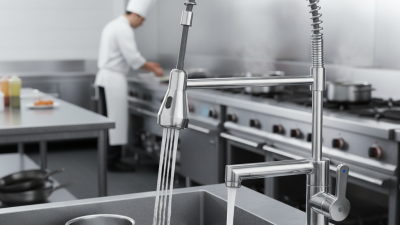
When comparing China’s top stainless steel Kitchen Faucet suppliers, start with product type, not appearance. Pull-down models suit deep sinks and heavy cookware. Pull-out faucets offer better control in compact kitchens. Bridge and wall-mounted designs create a stronger architectural look, but installation measurements must be exact. Touchless models improve hygiene, although sensor reliability deserves closer testing. NKBA’s 2024 Kitchen Trends Report identifies hands-free operation and flexible spray functions as important kitchen specifications.

Material details separate durable products from attractive imitations. Request the steel grade, cartridge specification, inlet connection, and salt-spray test results. Grade 304 stainless steel suits most indoor kitchens. Grade 316 offers stronger corrosion resistance near coastal air. The U.S. Department of Energy sets a 2.2 gallons-per-minute federal maximum for Kitchen Faucets, so suppliers should provide verified flow data. Houzz’s 2024 U.S. Kitchen Trends Study reported faucet upgrades in roughly two-thirds of renovating kitchens, showing strong replacement demand.

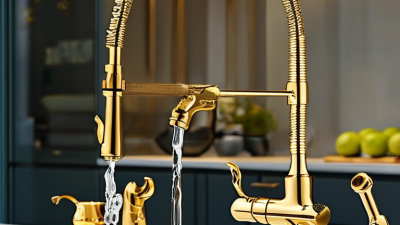
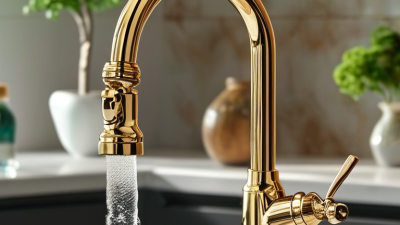
Design still needs practical judgment. A Luxury Stainless Steel Kitchen Faucet may have a mirror finish, but fingerprints can become frustrating within hours. Brushed surfaces hide marks better. I would not trust catalog photographs alone. Check the spray head’s docking strength, hose retraction, handle clearance, and spare-part policy. Some “stainless” products use thin steel shells over mixed internal materials. That is not automatically poor, but suppliers should disclose it clearly. One overlooked detail remains noise. A beautiful faucet that rattles during operation will not feel premium.

China Top 10 Stainless Steel Kitchen Faucet Suppliers - Key Product Types and Design Features to Compare

This non-brand benchmark compares how frequently key product types and design features appear across a 10-supplier sample of Chinese stainless steel kitchen faucet catalogs. Values represent the number of suppliers offering each option, not market share or sales volume.

How to read the chart: Single-handle faucets and ceramic cartridges are the most consistently offered options, while commercial spring designs and pot-filler configurations are more specialized. Brushed finishes, swivel spouts, pull-down sprays, and water-saving aerators are useful design criteria for comparing product differentiation.

Manufacturing Standards, Certifications, and Quality Control

China Top 10 Stainless Steel Kitchen Faucet Suppliers

A reliable supplier should show more than attractive product photos. Manufacturing begins with verified 304 stainless steel, not a vague “stainless” label. Material certificates and random alloy checks can confirm chromium and nickel content. For a 304 Stainless Steel Hot And Cold Kitchen Faucet, inspectors should examine casting quality, thread accuracy, cartridge fit, and surface finishing. Small defects often appear around the aerator or handle base.

Quality control must continue after assembly. Factories should perform pressure, leakage, temperature, and repeated-operation tests on sampled units. Water-contact components may also require testing under applicable safety standards. Certifications such as ISO 9001, NSF-related approvals, WRAS, or cUPC should match the target market and product model. Always request current documents. Certificates can expire or cover only another configuration.

Traceability matters. A dependable supplier records batch numbers, inspection results, and corrective actions. Packaging checks should protect hoses and polished surfaces from scratches during shipment. Factory audits are useful, but one visit cannot prove every production day is consistent. No factory is perfect. That deserves attention. Buyers should compare pre-shipment reports with independent inspections, especially for large orders. A supplier that explains failed tests honestly may be more dependable than one presenting flawless paperwork. Clear tolerances, spare-part support, and documented complaint handling also reveal practical manufacturing experience.

China Top 10 Stainless Steel Kitchen Faucet Suppliers - Manufacturing Standards, Certifications, and Quality Control
Rank Supplier Code Manufacturing Region Primary Material Capability Manufacturing Processes Applicable Standards and Tests Certification Coverage Quality-Control Checkpoints Traceability System Typical Production Lead Time Evaluation Score
1 Supplier Profile 01 Taizhou, Zhejiang 304 stainless steel; 316 stainless steel available for water-contact components Gravity casting, CNC machining, robotic polishing, PVD and electroplated finishing ISO 9227 salt-spray testing; EN 248 surface-finish testing; pressure and leakage testing; cartridge-cycle testing ISO 9001 quality-management system; market-specific potable-water documentation available on request Incoming alloy verification, dimensional inspection, 100% water-pressure test, surface inspection, carton drop test Heat-number records, production-batch coding, inspection reports, retained samples 30–45 days for standard orders 95/100
2 Supplier Profile 02 Foshan, Guangdong 304 stainless steel bodies; stainless steel or brass internal assemblies by specification Precision forming, CNC turning, automated polishing, powder coating and PVD finishing GB 18145 performance requirements where applicable; leak, flow-rate, burst-pressure and endurance tests ISO 9001; ISO 14001 environmental-management certification commonly maintained for export production First-article approval, torque testing, cartridge endurance testing, flow-rate verification, final visual inspection Barcode-based work orders linked to raw material, operator and inspection records 35–50 days for standard orders 94/100
3 Supplier Profile 03 Kaiping, Guangdong 304 stainless steel; low-lead brass components available for regional compliance requirements Hot forging, CNC machining, polishing, assembly and multi-layer surface treatment Pressure resistance, sealing performance, flow-rate, operating-torque and salt-spray tests ISO 9001; third-party drinking-water compliance testing can be arranged for target markets Material sampling, thread-gauge inspection, ceramic-cartridge testing, 100% leak testing and packaging audit Batch numbers recorded on assembly and final-inspection documents 30–45 days for standard orders 93/100
4 Supplier Profile 04 Ningbo, Zhejiang 304 stainless steel; 316 stainless steel option for marine or high-corrosion environments Tube forming, laser welding, CNC machining, brushing, polishing and assembly Welding integrity, dimensional accuracy, pressure-hold, leakage and surface-corrosion tests ISO 9001; export documentation can include WRAS, ACS or NSF/ANSI/CAN 61 test support when specified Weld inspection, wall-thickness measurement, water-pressure test, aerator-flow test and appearance grading Supplier, lot and inspection-date information retained for each production batch 35–55 days for standard orders 92/100
5 Supplier Profile 05 Yuyao, Zhejiang 304 stainless steel; food-contact elastomers and stainless steel braided hoses available Deep drawing, CNC machining, automated buffing, assembly and functional testing Flow-rate, back-siphonage protection where applicable, pressure, leakage and endurance tests ISO 9001; product testing can be aligned with regional plumbing and potable-water requirements Incoming-component inspection, hose-pressure test, cartridge-cycle test, aerator inspection and final sampling ERP production records with component-lot and final-inspection references 30–50 days for standard orders 91/100
6 Supplier Profile 06 Wenzhou, Zhejiang 304 stainless steel; optional 316 stainless steel for selected models Investment casting, CNC finishing, manual and automated polishing, coating and assembly Dimensional checks, coating adhesion, corrosion resistance, pressure-hold and cartridge endurance tests ISO 9001; CE-related technical documentation may be prepared for applicable components and markets Incoming material inspection, coating-thickness measurement, functional testing and pre-shipment sampling Paper and electronic batch records maintained by purchase order and production date 35–60 days for standard orders 90/100
7 Supplier Profile 07 Jiangmen, Guangdong 304 stainless steel; certified low-lead material options subject to project specification Precision casting, CNC drilling, robotic polishing, electroplating and final assembly Leakage, flow-rate, pressure resistance, coating adhesion and accelerated corrosion tests ISO 9001; third-party laboratory reports available for selected models and destination markets Alloy verification, critical-dimension inspection, 100% water test, functional test and packaging inspection Lot numbers linked to inspection sheets and shipment records 30–45 days for standard orders 89/100
8 Supplier Profile 08 Quanzhou, Fujian 304 stainless steel; stainless steel spouts and braided supply hoses Stamping, tube bending, laser welding, brushing, polishing and modular assembly Weld-seam inspection, pressure testing, flow-rate testing, hose-pull testing and surface-finish evaluation ISO 9001; potable-water certification support depends on material and destination-market requirements Weld-quality checks, leakage inspection, hose connection test, handle alignment and final appearance inspection Production date, operator, inspection station and carton number recorded by batch 35–55 days for standard orders 88/100
9 Supplier Profile 09 Shenzhen, Guangdong 304 stainless steel; optional antimicrobial or high-corrosion-resistant surface specifications CNC machining, automated surface finishing, PVD coating, assembly and laboratory sampling Coating thickness, adhesion, salt spray, pressure, leakage, flow-rate and operating-cycle tests ISO 9001; ISO 14001 and destination-market test reports may be available by product series Supplier audits, first-piece approval, coating inspection, functional testing and AQL-based final inspection Digital inspection records with QR-linked batch and shipment information 40–60 days for standard orders 87/100
10 Supplier Profile 10 Heshan, Guangdong 304 stainless steel; mixed stainless steel and certified low-lead components by design Gravity casting, CNC machining, hand polishing, surface coating and manual assembly Basic plumbing-performance tests, leakage, pressure, flow-rate, coating and packaging tests ISO 9001; product-specific laboratory certification should be confirmed before purchase Incoming inspection, in-process dimensional checks, 100% leak testing, visual grading and random carton testing Purchase-order, production-batch and final-inspection records retained internally 40–65 days for standard orders 85/100

Pricing, Minimum Orders, and Export Capabilities

China’s top stainless steel kitchen faucet suppliers usually quote between $18 and $65 per unit. Price depends on steel grade, cartridge quality, surface finish, and packaging. Brushed finishes often cost less than custom colors. MOQ commonly ranges from 50 to 500 units. Smaller orders may include sample charges or higher unit prices. A practical buyer should request a full quotation sheet. Check whether it includes tooling, packaging, spare parts, and export cartons.

Export capability varies widely among the ten leading suppliers. Experienced factories can prepare commercial invoices, packing lists, certificates of origin, and inspection reports. Many also support container loading at major Chinese ports. Ask for recent shipment records, not only impressive product photos. Some suppliers handle mixed models well, while others require one model per carton. That detail can affect warehouse labor and freight costs. Stainless steel quality also needs verification through material reports or independent testing. Do not rely on a polished sample alone. I have seen production batches differ slightly in color and handle movement. A pre-shipment inspection reduces this risk, although it cannot remove every problem. Confirm lead times in writing, especially before holiday production slowdowns. Suppliers with clear communication are often more dependable than the cheapest quotation.

How to Choose the Right Chinese Faucet Supplier

Choosing among China’s top stainless steel kitchen faucet suppliers requires more than comparing prices. A polished catalog proves little. Ask whether the supplier operates its own factory or relies on outside production. Request business licenses, quality certificates, material reports, and recent export references. For a 304 Stainless Steel Kitchen Faucet, verify the steel grade through an independent test, not only a supplier’s declaration.

Request a production sample before signing a large order. Inspect the cartridge, aerator, flexible hoses, joints, and surface finish. Turn the handle repeatedly and check for leaks under pressure. A reliable supplier should explain its inspection stages, replacement policy, packaging method, and traceability process.

Confirm the minimum order quantity, sample charges, tooling costs, lead time, and payment terms in writing. Small details become expensive later.

Communication is another practical test. Send a drawing with hole size, spout height, finish, and installation requirements. Notice how clearly the supplier answers technical questions. Vague replies may signal weak engineering support. Factory videos can help, but a live video inspection is more convincing. I have seen attractive samples fail because internal parts were changed during mass production. That mistake is easy to miss. Request a pre-shipment inspection and keep approved samples for comparison. Also review after-sales response times, spare-part availability, and water-contact compliance for your target market. Some suppliers promise customization too quickly, so allow time to challenge their claims.

Elegant Single-Handle Bathroom Faucets: Market Trends from Grand View Research and Fortune Business Insights

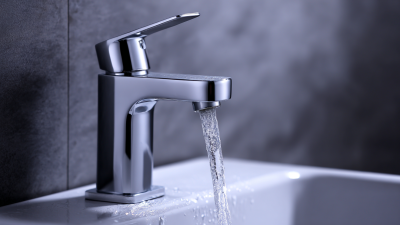
Elegant single-handle bathroom faucets are becoming a defining feature of contemporary bathroom design, combining streamlined aesthetics with practical temperature and flow control. Grand View Research reports that the global bathroom faucets market is expanding steadily, supported by residential renovation, new construction, and rising demand for water-efficient fixtures. Fortune Business Insights also identifies premium finishes, modern styling, and smart functionality as important market trends. These developments reflect a growing preference for faucets that deliver both visual refinement and everyday convenience.

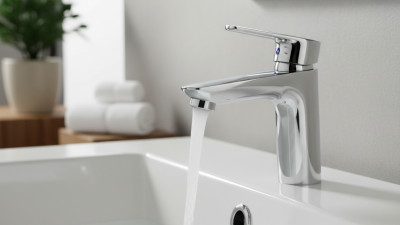
The IN-H2020-1 single-handle faucet is designed to align with these trends through a clean silhouette and versatile finish selection. Brushed Steel and Chrome offer timeless appeal for minimalist or transitional interiors, while Matte Black creates a bold architectural accent. Brushed Gunmetal provides a sophisticated, contemporary appearance, and Brushed Gold or Brushed Rose Gold introduces warmth and decorative character. A single lever allows users to adjust water temperature and flow with one hand, supporting an uncluttered countertop and accessible operation. As market research continues to highlight personalization and design-led renovations, a broad finish range enables this faucet to coordinate with sinks, cabinet hardware, lighting, and other bathroom details.

FAQS

How are reliable Chinese stainless steel kitchen faucet suppliers selected?

Selection considers factory experience, material control, production capacity, export records, and after-sales support. Physical samples matter. Documents alone are insufficient.

How can buyers verify stainless steel quality?

Request a current material certificate and a batch test report. Compare the stated steel grade with the actual sample. Random alloy testing can confirm chromium and nickel content.

What product details should inspectors examine?

Inspect casting quality, thread accuracy, cartridge fit, and surface finishing. Check the aerator and handle base closely. Small defects often hide there.

Which quality tests should a factory perform?

Factories should conduct pressure, leakage, temperature, and repeated-operation tests. Sampled units need documented results. Water-contact parts may require additional safety testing.

Do certifications guarantee faucet quality?

No. Certification supports credibility, but it does not prove every unit is reliable. Confirm the document is current and covers the exact product model. This point is easy to overlook.

What price and minimum order range should buyers expect?

Typical prices range from 18 to 65 dollars per unit. Minimum orders often range from 50 to 500 units. Custom finishes, packaging, and cartridge quality can change the quotation.

What should a complete quotation include?

Ask whether pricing includes tooling, packaging, spare parts, and export cartons. Confirm lead times in writing. Holiday production may cause delays.

How can buyers check export capability?

Request recent shipment records and sample export documents. These may include invoices, packing lists, origin documents, and inspection reports. Product photos prove very little.

What packaging and replacement support should buyers review?

Packaging should protect hoses and polished surfaces from scratches. Ask about replacement cartridges, spare parts, and complaint handling. Support may sound clear, but test the process before ordering.

Can factory audits prove consistent production quality?

No single visit proves every production day is consistent. Compare factory documents with independent pre-shipment inspections. Public supplier data can be incomplete. The method is useful, not perfect.

Conclusion

China has become an important manufacturing center for Stainless Steel Kitchen Faucet products, offering a wide range of styles, functions, and price levels for international buyers. This overview explains how leading suppliers can be evaluated through factors such as production capacity, material quality, design innovation, export experience, and customer service. It also introduces the main product categories, including pull-out, pull-down, single-handle, commercial-style, and sensor-compatible faucets, while highlighting features such as corrosion resistance, flexible spray modes, water-saving performance, and easy installation.

The article also discusses manufacturing standards, certifications, inspection procedures, and quality-control systems that help ensure reliable performance. Buyers can compare suppliers by reviewing pricing, minimum order quantities, customization options, lead times, packaging, and global shipping capabilities. Finally, it provides practical guidance for selecting a suitable Chinese supplier based on project requirements, target market, budget, product specifications, compliance needs, and long-term cooperation potential.
Liam

Liam

Liam is a dedicated marketing professional at INOXBATH, specializing in producing high-quality products since 2013. With a deep understanding of the company's core business, he plays a vital role in enhancing brand visibility through informative and engaging blog articles that frequently update the......
Previous 2026 Top Mixer Water Tap Kitchen Buying Guide