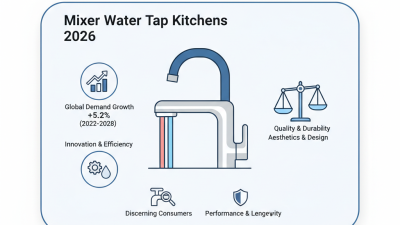

You know, these days, Smart Kitchen Taps are really leaving their luxury status behind and becoming just part of everyday connected kitchens. According to Grand View Research, the global smart home market is booming, with voice controls, sensors, and smart appliances leading the way. That’s pretty exciting for faucet makers because it opens up more room to innovate. But at the same time, it bumps up what consumers expect from their products.
Nowadays, people aren’t just judging faucets based on how they look. They’re paying more attention to water efficiency, touchless operation, temperature control, whether they work with apps, and how reliable the after-sales support is. In the U.S., the EPA’s WaterSense program highlights the importance of actual water savings and certified performance. Over in Europe, buyers often look at CE certifications, standards for safe contact with drinking water, and local installation rules — details that really matter when you’re installing a sink. And honestly, a good sensor should respond even when your hands are wet — not just work in a demo in the store.
In this guide, we’ll take a look at some of the top players in the Smart Kitchen Tap world — brands like Kohler, Moen, GROHE, Delta Faucet, and TOTO. They each have their own approach: some focus on voice control, others emphasize filtration, use heavy-duty cartridges, or keep things super simple with touch controls. Industry reports, like those from Fortune Business Insights, say that connectivity is a major factor driving demand in the smart home market. But it’s not always smooth sailing — connectivity can be unreliable at times, apps might become outdated, and features can lose support. That’s a bit uncomfortable to think about, but it’s worth considering if you’re making a purchase.
Looking at things like a manufacturer’s experience, warranty policy, availability of replacement parts, and whether their products have independent certifications can often tell you a lot more than just pretty pictures on a website. This overview is based on a mix of research, technical specs, and practical buying advice, so both distributors and buyers — whether in hospitality or retail — can make smarter decisions when comparing brands. Remember, no one brand is perfect for every market, and that’s something worth keeping in mind.
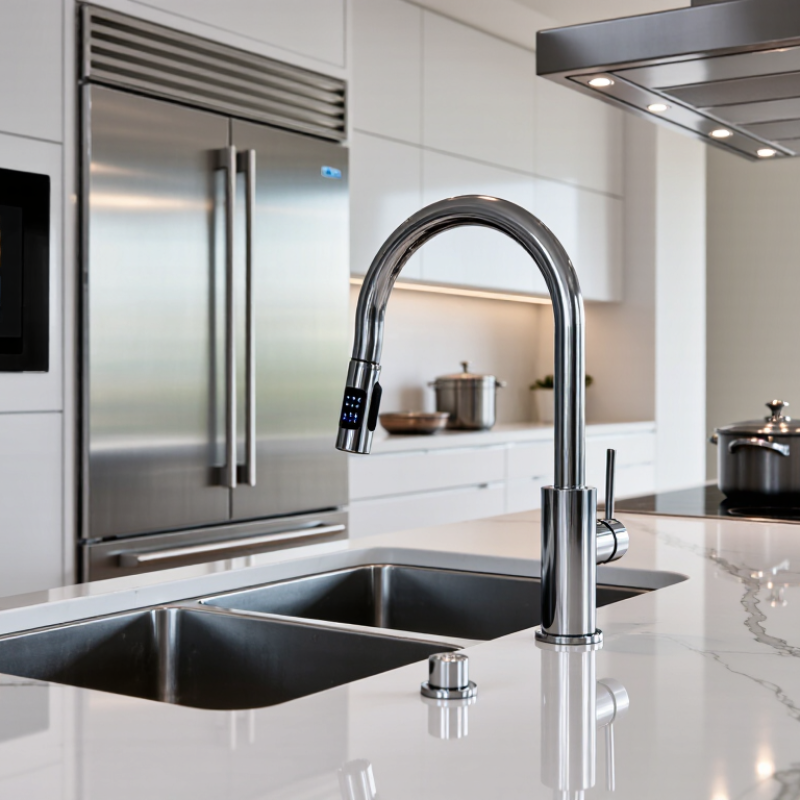
A Smart Kitchen Tap is a water fixture that combines electronic control with conventional plumbing. It may use motion sensors, touch activation, temperature memory, or voice-compatible controls. The goal is practical: wash vegetables without touching a dirty handle, then reduce water flow with a simple gesture. Some models also display usage data through an application. It is not magic. The tap still depends on stable water pressure, reliable power, and correct installation.
Key features include automatic shutoff, adjustable sensing distance, child-safe temperature limits, and easy-clean spray heads. In field evaluations, sensor delay matters more than many buyers expect. A tap that reacts too slowly can waste water and frustrate users. Battery access is important, too. A hidden battery compartment may look attractive, but maintenance becomes difficult under a crowded sink. Quality manufacturers should provide clear specifications, spare-part information, warranty terms, and installation guidance in several languages.
The market now covers apartments, hotels, premium homes, rental properties, and kitchen renovation projects. Global buyers should compare water-efficiency data, material safety, connector sizes, and regional certification requirements. Smart Basin Faucettechnology offers a useful comparison because basin applications often expose the same sensor and hygiene issues. However, Kitchen Taps face heavier use, grease, splashing, and larger cookware. Not every connected feature deserves a higher price. A careful buyer should test response time, manual operation, and replacement support before approving a large order.
Modern Smart Kitchen Taps combine plumbing engineering with sensors, compact electronics, and water-saving controls. Infrared sensors detect hand movement and open the valve without touching the handle. This reduces contact after handling raw food. Some models also use voice control, although background noise can cause missed commands.
Temperature monitoring is another important technology. An internal sensor tracks water heat and helps prevent sudden changes during use. LED indicators may show temperature through simple color signals. Ceramic cartridges provide smoother control and usually resist dripping when properly maintained. Flow restrictors reduce consumption while preserving a practical spray pattern. Small details matter.
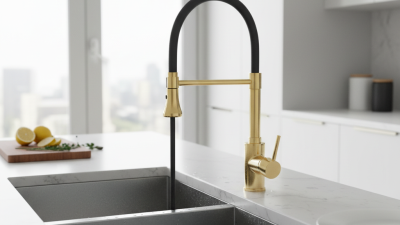
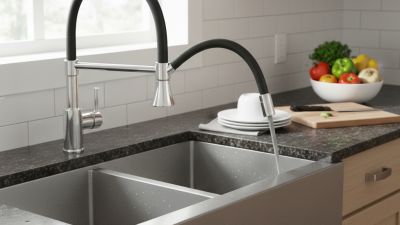
A pull-out design adds daily convenience. The Kitchen Sink Gold Tap Pull Out Kitchen Mixer Tap, for example, should use a flexible hose, secure docking weight, and a reliable retraction system. Gold finishes need careful cleaning because abrasive powders can damage their surface. I have found that touchless controls work best when the sensor window stays clean and receives steady power. No sensor is perfect. Battery alerts can be easy to ignore, too. Buyers should check installation dimensions, water-pressure requirements, replacement parts, and local safety certifications before ordering. Connectivity features sound impressive, but unnecessary software can create maintenance problems. A dependable tap should still deliver accurate flow when the network is unavailable.
Smart kitchen tap manufacturers usually fall into three groups: OEM factories, ODM developers, and specialized engineering suppliers. OEM factories produce private-label models from approved specifications. ODM suppliers offer ready-made platforms with adjustable finishes, sensors, and control panels. Engineering-focused manufacturers often build advanced product lines, including touchless taps, voice-controlled mixers, temperature displays, and filtered water systems.
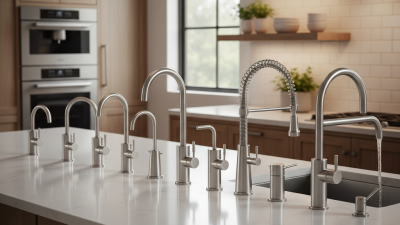
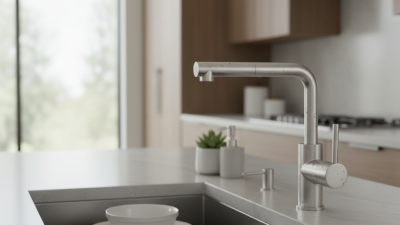
A practical product line should include several installation options. Pull-down spray heads suit busy sinks, while compact models fit apartments. The Single Lever Kitchen Mixer Kitchen Sink Faucet remains popular because it offers simple temperature control and broad compatibility. Buyers should examine cartridge life, sensor response, water pressure range, and spare-part availability. A reliable manufacturer shares test reports, material details, and clear warranty terms. Stainless steel may resist corrosion, but poor internal seals can still cause leaks. No supplier is perfect.
Tips: Request a sample before placing a large order. Test the sensor with wet hands. Check whether the control works during low water pressure. Ask for packaging photos and installation instructions. Also, verify regional compliance requirements through qualified local professionals. Factory experience matters, yet documentation matters more than confident sales language. Be careful with exaggerated claims. A smart tap that looks impressive in a showroom may feel slow in a real kitchen.
Global buyers should assess smart kitchen tap manufacturers through measurable evidence, not polished catalog images. The WHO and UNICEF Joint Monitoring Programme reported that 2.2 billion people lacked safely managed drinking water in 2022. This makes hygiene, material traceability, and service access practical screening issues.
For Sink Tap Kitchen Stainless Steel products, request material certificates, cartridge test results, and food-contact compliance documents. “304 stainless steel” alone proves little; internal parts may use different alloys. The U.S. Environmental Protection Agency notes that WaterSense bathroom faucets use 1.5 gallons per minute, compared with the 2.2-gallon federal benchmark. Use flow data carefully. Kitchen rinsing needs stronger performance.
Smart functions deserve equal scrutiny. Check sensor response under wet hands, manual operation during power failure, battery life, and replacement availability. Ask for testing against destination-market requirements, such as NSF/ANSI/CAN 61 or lead-content limits where applicable. A two-year warranty sounds useful, yet it may exclude electronics, seals, or labor. Read the exclusions. Independent factory audits should verify weld quality, hose durability, leakage pressure, and final inspection records. A glossy finish can hide weak threads. Buyers sometimes overvalue app control and undervalue repairability. That choice deserves reconsideration.
For global procurement, product compliance and water efficiency are essential because requirements vary across markets. Buyers also evaluate durability, smart-function reliability, installation compatibility, after-sales support, and total ownership cost. The percentages represent a neutral procurement weighting model rather than the performance of any specific company or brand.
Top Smart Kitchen Tap Manufacturers for Global Buyers
Regional Manufacturing Strengths and Export Considerations
Manufacturing regions often specialize in different parts of smart kitchen tap production. East Asian factories usually offer broad component networks, competitive pricing, and fast model customization. Their strengths include sensor assembly, touch controls, cartridge production, and large-volume machining. European manufacturers often focus on refined engineering, water efficiency, and strict quality documentation. Their production costs may be higher, but design consistency can reduce installation problems. South Asian suppliers can provide flexible labor capacity and practical customization for developing markets.
Export buyers should inspect more than the sample’s appearance. Ask about brass or stainless-steel grades, cartridge durability, leak testing, and sensor response after repeated use. A tap may look excellent under showroom lights. It can still fail after months of hard-water exposure. Request test records, material declarations, and clear production tolerances. Independent factory audits are useful, though they cannot replace ongoing quality checks.
Shipping requirements also deserve careful attention. Confirm product dimensions, packaging strength, spare-part availability, and realistic lead times before signing purchase terms. Check water-contact rules in the destination market, along with labeling, manuals, electrical safety, and customs documents. Small errors in product codes or certificates can delay a container. That is expensive. Buyers should also compare warranty procedures and remote technical support. Price remains important, but an unusually low quotation may hide thinner metal, weaker sensors, or inconsistent inspection. A better decision balances regional expertise, export readiness, and evidence from actual production batches.
| Manufacturing Region | Typical Smart Tap Product Focus | Regional Manufacturing Strengths | Common Export Advantages | Key Export Considerations | Relevant Compliance Areas | Recommended Buyer Verification |
|---|---|---|---|---|---|---|
| Eastern China | Touchless sensor taps, pull-down spray taps, temperature-display taps, and app-connected kitchen fixtures. | Dense supplier networks for brass casting, stainless steel processing, cartridges, sensors, solenoid valves, electronics, and packaging. Strong OEM and private-label production capacity. | Broad component availability, scalable production, extensive port infrastructure, and flexible customization for international buyers. | Confirm material grade, waterway construction, firmware ownership, battery safety, intellectual-property terms, and consistency between samples and mass production. | Destination-market plumbing standards, electrical safety requirements for powered models, radio requirements for wireless functions, chemical restrictions, and packaging rules. | Request third-party test reports, factory audit records, production samples, inspection criteria, spare-parts lists, and documented quality-control procedures. |
| South China | Electronic sensor faucets, voice or app-enabled models, compact smart modules, and integrated kitchen water-management products. | Strong electronics, embedded software, hardware integration, tooling, injection molding, and rapid product-development ecosystems. | Fast prototyping, high customization potential, access to electronic components, and established air and ocean freight connections. | Assess software support duration, cloud-data handling, mobile-app availability by country, cybersecurity controls, component substitution policies, and after-sales capability. | Radio-frequency approvals where applicable, electrical safety, electromagnetic compatibility, cybersecurity expectations, privacy obligations, and potable-water contact requirements. | Test the complete product ecosystem, including app pairing, offline operation, firmware updates, sensor response, water shut-off behavior, and recovery after power loss. |
| Southeast Asia | Mid-volume sensor taps, stainless-steel kitchen fixtures, basic touch-control products, and contract-manufactured plumbing components. | Growing metalworking, assembly, plastics, and contract-manufacturing capabilities, with increasing integration into regional supply chains. | Potential tariff benefits under applicable trade agreements, diversified sourcing options, and competitive regional labor and assembly capacity. | Verify actual local value addition, production capacity, component origin, lead-time reliability, port schedules, and continuity plans for imported electronics or cartridges. | Import rules in the destination country, applicable trade-agreement documentation, plumbing approvals, electrical requirements, and product labeling. | Conduct supplier-site verification, review origin documentation, confirm annual capacity, and use pre-shipment inspection for initial and high-value orders. |
| South Asia | Value-oriented touchless taps, conventional kitchen taps with electronic add-ons, and products adapted to local water and power conditions. | Large domestic plumbing markets, expanding metal and assembly sectors, and increasing experience with cost-sensitive product engineering. | Competitive pricing for selected product categories, regional market knowledge, and opportunities for customized specifications. | Check finish durability, water-pressure operating range, corrosion resistance, sensor performance, electrical protection, and consistency of export packaging. | Destination-country plumbing and electrical approvals, water-contact material rules, energy or battery regulations, and consumer labeling requirements. | Require pressure-cycle testing, salt-spray or finish testing, electrical safety evidence, installation instructions, and a defined warranty process. |
| Europe | Premium sensor-controlled taps, water-saving fixtures, thermostatic solutions, and connected products with strong design emphasis. | Advanced engineering, design, precision machining, product testing, and established expertise in water efficiency and long-life plumbing components. | Strong quality perception, mature technical documentation, proximity to European distribution networks, and experience with regulated markets. | Higher production costs, longer development cycles for customized products, and strict documentation, traceability, sustainability, and after-sales expectations. | Applicable European plumbing, electrical, chemical, radio-equipment, environmental, packaging, and data-protection requirements. | Review declaration and technical documentation, water-efficiency evidence, material traceability, cybersecurity policies, warranty terms, and availability of replacement parts. |
| North America | Hands-free kitchen faucets, voice-compatible products, pull-down designs, filtration-integrated systems, and premium connected fixtures. | Strong product development, testing, distribution, and specialization in consumer-focused smart-home integration and service support. | Direct access to large retail and professional channels, established warranty systems, and familiarity with regional installation practices. | Account for certification costs, state or provincial requirements, replacement-cartridge compatibility, retailer packaging standards, and long-term service obligations. | Applicable national and regional plumbing, electrical, radio, water-efficiency, chemical, accessibility, and consumer-product requirements. | Verify certification scope, model-number consistency, installation compliance, retail warranty coverage, technical support hours, and replacement-part availability. |
| Middle East | Premium touchless taps, corrosion-resistant fixtures, hospitality-grade products, and models designed for variable water conditions. | Growing assembly and distribution capabilities, strong demand from hospitality and construction projects, and experience with luxury sanitary products. | Strategic access to Gulf, African, and regional markets, with demand for premium finishes and project-based procurement. | Evaluate heat exposure, mineral content, water-pressure variation, desalinated-water compatibility, voltage conditions, and local service coverage. | Country-specific conformity requirements, electrical safety, plumbing approvals, energy rules, Arabic or bilingual labeling where required, and import documentation. | Request environmental stress testing, confirm installation compatibility, validate local certification, and secure a spare-parts inventory before project delivery. |
| Latin America | Entry-to-mid-range sensor taps, water-saving kitchen fixtures, and smart functions integrated into conventional designs. | Regional assembly and distribution potential, growing residential construction demand, and product adaptation to local installation conditions. | Shorter regional delivery routes for selected markets, local-language support opportunities, and demand for differentiated water-saving products. | Consider customs procedures, currency exposure, voltage differences, local water-pressure conditions, after-sales reach, and spare-parts lead times. | National plumbing and electrical approvals, import labeling, consumer-protection rules, wireless-device requirements, and water-efficiency standards where applicable. | Confirm Spanish or Portuguese documentation, test regional voltage versions, evaluate distributor service capability, and define inventory responsibilities. |
Top Smart Kitchen Tap Manufacturers for Global Buyers
Quality, Compliance, Pricing, and After-Sales Evaluation
Quality begins with water control, sensor accuracy, and stable temperature performance. Inspect brass or stainless-steel construction, cartridge durability, and surface resistance. A reliable smart tap should respond quickly, even with wet or soapy hands. Ask for test reports covering pressure cycles, leakage, electrical safety, and water-contact materials. Certification must match the destination market, not merely the factory’s domestic requirements. Check documentation carefully. Missing reports can delay customs clearance or retail approval.
Pricing should reflect total ownership, not only the unit quotation. Compare controller quality, installation parts, packaging strength, software support, and replacement components. A cheaper tap may require costly adapters or frequent sensor replacement. Request a sample before placing a large order. Test it under low pressure, hard water, and repeated daily use. I have seen attractive samples hide inconsistent finishing between production batches. That weakness deserves a written quality agreement.
After-sales service often separates dependable manufacturers from temporary suppliers. Confirm warranty duration, response times, spare-part availability, and firmware update procedures. Ask whether technical support can guide plumbers in the buyer’s language. Keep records of defect rates and corrective actions. Some suppliers promise fast assistance, yet provide vague escalation channels. That is a warning. Buyers should also clarify who pays for replacement shipping and installation-related failures. A practical evaluation combines factory audits, sample testing, compliance review, transparent pricing, and measurable service commitments.
Request material certificates, cartridge test results, and water-contact compliance documents. “304 stainless steel” alone proves little. Internal parts may use other alloys. Check every certificate carefully.
Test the sensor with wet, soapy, and dry hands. Check response speed and accidental activation. Manual operation should remain available during power failures. Small details matter.
Compare the stated flow rate with destination-market requirements. Kitchen rinsing may need stronger performance than bathroom washing. Very low flow can slow cleaning tasks. Efficiency is not the whole story.
Request reports for pressure cycles, leakage, electrical safety, and water-contact materials. Independent audits should inspect welds, hoses, threads, and final records. A glossy surface can hide weak threads. Inspect the boring parts.
Compare the full ownership cost, not only the unit quotation. Include adapters, installation parts, packaging, software support, and spare components. A cheaper tap may need frequent sensor replacement. The lowest price can mislead.
Test samples under low pressure, hard water, and repeated daily use. Check temperature stability, sensor accuracy, finish consistency, and leaks. Production batches may differ from attractive samples. I would not assume uniformity.
Confirm coverage for electronics, seals, labor, and replacement shipping. A two-year warranty may exclude important parts. Read exclusions and escalation procedures. Promises are not enough.
Ask about response times, spare-part availability, firmware updates, and technical guidance. Confirm whether support is available in the buyer’s working language. Clarify who pays for installation-related failures. Vague support channels deserve reconsideration.
Smart Kitchen Tap products combine traditional water delivery with intelligent functions such as touchless activation, voice or app control, temperature monitoring, water-flow adjustment, and usage tracking. Modern models may use infrared sensors, digital valves, smart connectivity, filtration systems, and energy-efficient components to improve convenience, hygiene, safety, and resource management. The market includes manufacturers focused on residential products, commercial solutions, premium designs, or large-scale OEM and private-label production, offering varied styles, configurations, and technology levels.
For global buyers, key evaluation factors include product reliability, sensor performance, material quality, installation compatibility, customization capacity, production consistency, and technical support. Regional manufacturing strengths, export experience, packaging standards, shipping efficiency, and documentation should also be considered. Buyers should compare certifications, testing procedures, warranty terms, spare-parts availability, response times, minimum order quantities, and total pricing rather than focusing only on the initial unit cost. A careful assessment of quality, compliance, after-sales service, and long-term supply capability can support a secure and sustainable purchasing decision.