inquiry1
If you want the latest catalog, design inspiration and more, please feel free to contact us
0%

A Cold Water Filter Tap can really make everyday hydration easier, cleaner, and a bit more visible. Instead of the hassle of filling a jug and waiting around, you just turn the handle and voilà — filtered water flows right out. At first glance, it might seem like a small upgrade, but honestly, it can genuinely change your daily routine.

Rick Andrew, who used to work as a water treatment expert at NSF International, once said, “The right treatment system must match the water quality problem.” And that really hits home. When you're picking a filter, don’t just go for the shiny look or the cheapest price. It’s smart to consider local water reports, your plumbing setup, and what your household actually needs. Municipal tap water can sometimes have that chlorinated taste, sediment, or traces of other stuff you don’t want. And if you drink water from a private well, the concerns might be totally different. So, testing your water is always a good idea.

The best Cold Water Filter Tap combines certified filtration, decent flow, and easy cartridge replacement. Make sure to check for clear performance claims and independent certifications from trusted groups like NSF International. Also, pay close attention to how long the cartridge lasts. It’s pretty easy to forget about replacing filters, but if you don’t, it can become a weak point. That’s a small detail that’s easy to overlook but really important.

In real kitchens, small details matter a lot. The tap should sit comfortably next to your main faucet, and the handle should feel solid — not wobbly. You want filtered water to come out without making you wait forever. Some systems help reduce waste, while others require regular flushing. Nothing is perfect, and even the most reliable systems need some maintenance and realistic expectations.

Getting a tap like this isn’t about expecting instant, perfectly pure water. It’s more about making a sensible, proven improvement that’s backed by testing and proper upkeep. For many homes, it’s that sweet spot — offering convenience without adding unnecessary complexity.
Why Choose a Cold Water Filter Tap for Your Home?

Define Cold Water Filter Taps and Their Filtration Stages

Why Choose a Cold Water Filter Tap for Your Home?

A Cold Water Filter Tap combines a drinking-water outlet with built-in filtration. It connects to the cold-water supply under your sink. Filtered water then flows through a separate tap, rather than passing through the entire household system. This setup can reduce chlorine taste, sediment, and unpleasant odours in everyday drinking water. A clean glass may taste noticeably fresher.

Filtration stages vary between systems. The first stage usually captures sand, rust, and other visible particles. A carbon stage can reduce chlorine and some organic compounds that affect taste. More advanced systems may use ultrafiltration or reverse osmosis membranes. These can target smaller impurities, but performance depends on water pressure, filter condition, and certified testing. No single tap removes everything. That detail is often overlooked. Some filters are not designed to remove dissolved minerals, fluoride, or microorganisms. Check local water reports and the product’s tested claims before choosing one. Replace cartridges on schedule, even when the water still looks clear.

Tips: Run the tap briefly after long periods of non-use. Keep the outlet clean and dry. Mark the replacement date on the cabinet door. If flow becomes weak, investigate the filter before blaming the plumbing. A simple home water test can also reveal whether your chosen filtration stage matches the actual water problem.

Measure the Need: WHO/UNICEF Reported 2.2 Billion Lacked Safe Water in 2022

Why Choose a Cold Water Filter Tap for Your Home?

The need for safer water is not abstract. In 2022, WHO and UNICEF reported that 2.2 billion people lacked safely managed drinking water. This figure includes households facing unreliable supplies, distant sources, or contamination risks. It also shows why water quality deserves attention inside the home, even where public systems generally operate well.

A Cold Water Filter Tap can provide filtered water directly at the sink. It may reduce chlorine taste, sediment, and certain contaminants, depending on the filter design. A suitable model should match local water conditions and carry independent performance testing. Check the filter’s stated reduction claims, replacement schedule, and flow rate before buying. Maintenance matters. An exhausted cartridge can reduce performance and create avoidable hygiene concerns.

Daily use makes weaknesses visible. A glass may taste cleaner, while fine particles no longer settle in a kettle. However, a filter is not a universal treatment system. It cannot automatically remove every chemical or microorganism. Test uncertain water, follow local health guidance, and clean the tap area regularly. I have sometimes treated convenience as proof of safety, which is a mistake. Good decisions need evidence, not just a polished faucet.

Identify Key Contaminants Using the EPA’s 15-ppb Lead Action Level

Why Choose a Cold Water Filter Tap for Your Home?

Lead can enter drinking water through aging service lines, solder, or household plumbing. The EPA’s 15-parts-per-billion action level helps identify when lead exposure requires urgent attention. It is not a guarantee that water below 15 ppb is completely risk-free. Even small amounts can concern families with infants, children, or pregnant people.

A Hot Cold Water Filter Faucet can provide filtered cold water for drinking and cooking. Choose a unit independently certified for lead reduction under NSF/ANSI 53. Check its performance data sheet, not only its packaging claims. A filter may reduce lead effectively, but only when installed correctly and replaced on schedule. Read the label carefully.

Testing still matters. Run a certified laboratory test after plumbing work, unusual taste, or long periods of stagnation. Collect a first-draw sample after the tap has rested overnight. Then compare it with a flushed sample. A glass of cloudy water is not proof of lead. Neither is clear water proof of safety.

Maintenance is easy to underestimate. I have seen filters left in place far beyond their rated capacity. That can reduce confidence in the result. Flush new cartridges as directed, keep records, and avoid using hot tap water for drinking. Cold water is generally preferred because heat can increase metal leaching from plumbing. Retest when conditions change.

Why Choose a Cold Water Filter Tap for Your Home?

Identify key contaminants using the EPA’s 15-ppb lead action level.

The chart compares selected U.S. EPA drinking-water regulatory benchmarks in parts per billion (ppb). Lead has an EPA action level of 15 ppb, while copper has an action level of 1,300 ppb. The other values shown are maximum contaminant levels. These benchmarks are not predictions of tap-water quality; testing is the best way to identify contaminants in a specific home.

Source: U.S. Environmental Protection Agency, National Primary Drinking Water Regulations.

Match Filtration Technologies to Contaminants and Water Conditions

A cold water filter tap can make drinking water more convenient and reduce reliance on bottled water. It delivers treated water directly beside the kitchen sink. However, convenience should not decide the system alone. Match the filtration method to your water conditions. Test before choosing. Water quality can vary between buildings, wells, and seasons.

Start by identifying the likely contaminants. Sediment filters catch sand, rust, and visible particles. Activated carbon can reduce chlorine, unpleasant tastes, odors, and some organic compounds. It does not reliably remove dissolved salts or every metal. Ultrafiltration can target fine particles and many bacteria, while reverse osmosis is better suited to dissolved minerals, nitrate, fluoride, and certain metals. Ion exchange may help with hardness or specific dissolved contaminants. A recent laboratory report is more dependable than guesswork.

An Under Sink Hot And Cold Water Filter System may sound ideal for every use. In practice, many systems filter only the cold drinking-water line. Hot water may bypass the filter or exceed its temperature rating. Check pressure, flow rate, cartridge life, and replacement access before installation. I once underestimated cabinet space; that was a mistake. A technically strong filter can still frustrate daily use if the tap feels slow or the cartridges are hard to reach. Read independent performance data, and question claims that lack test conditions.

Compare NSF/ANSI 42, 53, and 58 Certification Requirements

Why Choose a Cold Water Filter Tap for Your Home?

A cold-only filter tap creates one treated stream for drinking, cooking, and filling a glass. However, certification matters more than the tap’s polished finish. The U.S. EPA’s 2023 Drinking Water Infrastructure Needs Survey estimates that American drinking-water systems require $625 billion over 20 years. That figure describes infrastructure pressure, not proof that household filtration removes every contaminant.

NSF/ANSI 42 covers aesthetic claims, including chlorine taste, odor, and particulate reduction. A 42-certified Hot And Cold Filter Tap may improve a glass’s smell and visible sediment. It does not automatically address lead, cysts, or chemicals. NSF/ANSI 53 targets specific health-effect contaminants, such as lead. The exact reduction claim must appear in the certification details. Read the claim, not just the logo.

NSF/ANSI 58 applies to reverse-osmosis systems. These systems commonly include a membrane, storage tank, and drain connection. The standard evaluates claims involving total dissolved solids reduction, recovery, efficiency, and structural integrity. Despite the phrase Hot And Cold Filter Tap, many cartridges are certified only for cold-water use. Filters need care. The 2024 WHO/UNICEF JMP report states that 2.2 billion people lacked safely managed drinking water in 2022. I would not choose a tap from certification alone; installation pressure, cartridge age, and private-well testing can quietly change performance.

Calculate Filter Capacity, Flow Rate, and Replacement Costs

Why Choose a Cold Water Filter Tap for Your Home?

A cold water filter tap can make daily drinking water more convenient and reduce the need for bottled water. The useful question is not only how clean the water feels. It is whether the filter capacity, flow rate, and replacement cost suit your household. Start with your local water report and the filter’s certified performance data. Do not rely on taste alone.

Calculate capacity from expected usage. If one person drinks and cooks with two litres daily, four people need about 240 litres each month. A 2,400-litre cartridge may last ten months in theory. Real use is often higher.

Washing vegetables, flushing the filter, and sediment can reduce that estimate. My first calculation was too optimistic because I ignored guests and cooking water.

Flow rate also needs a practical check. A tap delivering two litres per minute fills a 500-millilitre bottle in 15 seconds. That is comfortable for drinking, but slower flow may be normal for finer filtration. Compare the rated flow with your household’s busiest moment.

A simple cost calculation is cartridge price divided by its realistic lifespan. For example, a 60-pound cartridge lasting six months costs about 10 pounds monthly. Add installation, servicing, and possible pre-filter replacement. Keep a replacement date on the calendar, but review the estimate after three months. Real habits matter more than perfect specifications.

Review Cold-Water Installation, Maintenance, and Microbial-Safety Practices

Why Choose a Cold Water Filter Tap for Your Home?

Installing a cold water filter tap requires more than connecting a cartridge beneath the sink. A qualified plumber should check water pressure, pipe condition, and backflow protection before installation. Keep filtered water lines separate from hot water pipes. Heat can accelerate microbial growth inside stagnant sections. A Hot Water And Filtered Cold Water Tap should have clearly separated outlets and controls.

Flush the new cartridge according to its instructions, even if the water looks clear. Discard the first several litres after installation. Replace the cartridge on schedule, not only when taste changes. Mark the replacement date inside the cabinet. Clean the outlet and aerator regularly with a food-safe method. Small gaps around fittings can collect residue.

Microbial safety depends on daily habits. Use the tap often, because long stagnation may affect water quality. Do not touch the outlet with dirty hands or cloths. If the tap remains unused for several days, flush it thoroughly before drinking. Filtered water is not automatically sterile. That distinction matters. Certified filter performance should match the contaminants found in your local supply. A home water report can guide that choice.

It is easy to focus on installation and forget maintenance. The weak point is often the routine. Even careful households may miss a replacement date or overlook a slimy aerator. Record keeping feels excessive, but it makes safety easier to verify.

How to Choose a Single-Handle Brass Basin Faucet for Double-Hole Countertop Bathroom Sinks

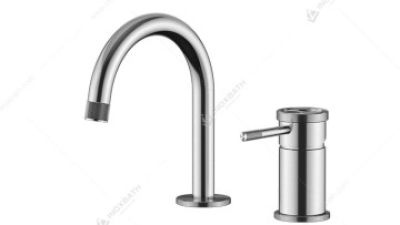
Choosing a single-handle brass basin faucet for a double-hole countertop bathroom sink starts with checking the sink’s hole spacing and the faucet’s mounting requirements. A single-handle design offers convenient control of water flow and temperature, while a brass body provides a solid feel and dependable everyday performance. For a double-hole countertop, confirm whether the faucet includes or can be paired with a suitable cover plate, escutcheon, or mounting accessory to conceal the unused opening and create a neat installation. Also consider the spout height and reach so water flows comfortably into the basin without excessive splashing.

The IN-S4046A is available in Brushed Steel, Chrome, Matte Black, Brushed Gunmetal, Brushed Gold, and Brushed Rose Gold, allowing the faucet to coordinate with different bathroom styles and hardware finishes. Brushed surfaces can help create a softer, understated appearance, while Chrome offers a bright, reflective look. Matte Black and Brushed Gunmetal suit modern interiors, whereas Brushed Gold and Brushed Rose Gold add warmth and decorative contrast. Before purchasing, compare the finish with the sink, countertop, drain, and cabinet fittings, and verify the connection size, installation space, and maintenance requirements. A faucet with a smooth single-handle operation and an easy-to-clean surface can be especially practical for daily use.

FAQS

What does the 15-ppb lead action level mean?

It signals when lead exposure needs urgent attention. It does not prove water below 15 ppb is completely risk-free. Infants, children, and pregnant people may need extra caution.

How can lead enter household drinking water?

Lead may enter through aging service lines, solder, or household plumbing. Plumbing history matters. Clear water can still contain lead.

Why choose a cold water filter tap?

It provides filtered cold water for drinking and cooking. Cold water is generally preferred because heat may increase metal leaching.

What certification should a lead-reduction filter have?

Choose independent certification for lead reduction under NSF/ANSI 53. Check the performance data sheet. Packaging claims alone are not enough.

How should drinking water be tested for lead?

Use a certified laboratory after plumbing work, unusual taste, or long stagnation. Collect a first-draw sample after overnight rest. Compare it with a flushed sample.

Does cloudy water prove lead contamination?

No. Cloudiness is not proof of lead. Clear water is not proof of safety, either.

How often should a filter cartridge be replaced?

Follow the rated capacity and replacement schedule. Flush new cartridges as directed. I have seen filters kept far beyond their useful capacity.

How can a household estimate filter capacity?

Four people using two litres daily need about 240 litres monthly. A 2,400-litre cartridge might last ten months theoretically. Real use may be higher because cooking, guests, flushing, and sediment add demand.

How should filter flow rate and cost be evaluated?

A two-litre-per-minute tap fills a 500-millilitre bottle in about 15 seconds. Slower flow may support finer filtration. Divide cartridge price by its realistic lifespan, then add installation and servicing costs. Perfect specifications can mislead.

Conclusion

A Cold Water Filter Tap provides a convenient way to access treated drinking water directly from a dedicated faucet. Choosing one begins with understanding your local water conditions and the contaminants that may be present. The global need for safer water remains significant, with 2.2 billion people reported to lack safely managed drinking water in 2022. Testing is therefore important, especially when considering lead, for which the EPA uses a 15-parts-per-billion action level. Different filtration stages and technologies target different concerns, including particles, chlorine, dissolved metals, and certain microorganisms.

Before installation, compare certification requirements such as NSF/ANSI 42 for aesthetic improvements, 53 for health-related contaminant reduction, and 58 for reverse-osmosis systems. Also calculate filter capacity, flow rate, and replacement costs to ensure the system suits household demand. Proper cold-water installation, regular cartridge replacement, cleaning, and microbial-safety practices help maintain performance. A well-matched filter tap can improve taste and confidence while providing a practical, manageable drinking-water solution.
Oliver

Oliver

Oliver is a dedicated marketing professional at INOXBATH, specializing in high-quality product development and service since 2013. With a robust background in the industry, he combines his extensive experience with a passion for innovation. In 2025, he played a crucial role in enhancing the 6S site......
Previous Top 10 Gold Filter Tap Types for Global Buyers