


Sourcing for Extreme Climates: A B2B Guide to Stainless Steel Faucet Resilience (Part 2)
Following our initial metallurgical breakdown—[The Metallurgical Reality of Stainless Steel: Debunking the "Rust-Proof" Myth] —procurement directors now understand how acidic cleaners and missing factory passivation compromise commercial plumbing. However, chemical misuse is only one side of the Total Cost of Ownership (TCO) equation. The operational environment dictates the ultimate lifespan of the fixture.
When specifying commercial faucets for beachfront hospitality resorts, open-air tropical pavilions, or industrial zones, the atmospheric challenges shift from predictable indoor humidity to aggressive meteorological assaults. Understanding how extreme global climates interact with the dynamic components of a faucet is critical for selecting the correct austenitic alloy (304 vs. 316L) and establishing rigorous facility maintenance protocols.
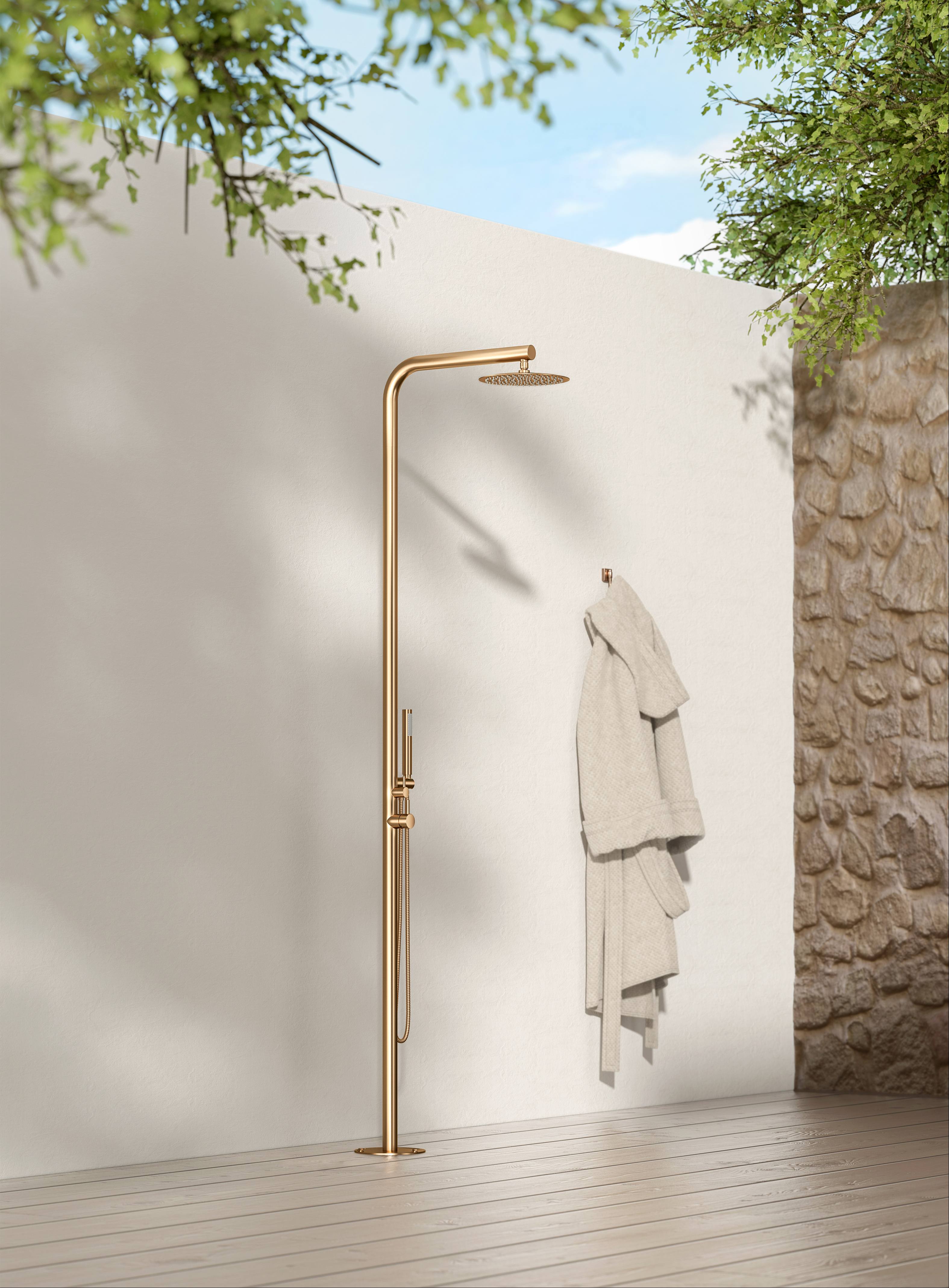
The Coastal and Industrial Assault: Chlorides and Crevice Corrosion
In coastal development zones—defined strictly as properties within 50 kilometers of a shoreline—faucets are subjected to a relentless barrage of marine salt aerosols. Driven by coastal winds and cyclonic storm systems, these microscopic chloride ions (Cl-) aggressively penetrate the chromium oxide passivation film.
For dynamic plumbing fixtures, this environmental threat is magnified by their mechanical architecture. A Commercial Kitchen Tap or an articulated folding faucet features numerous swivel joints, threaded aerator housings, and base escutcheons. These overlapping metal surfaces create microscopic gaps. When airborne saline moisture or industrial sulfuric dust infiltrates these gaps, it becomes trapped. Deprived of the ambient oxygen required to auto-regenerate the passivation film, the trapped chlorides initiate severe localized decay known ascrevice corrosion.
To neutralize this threat, project specifiers must upgrade from standard 304 stainless steel to marine-grade 316L. The critical metallurgical differentiator in 316L is the integration of 2.0% to 3.0% Molybdenum (Mo), which dramatically elevates the metal’s Pitting Resistance Equivalent Number (PREN). Furthermore, the "L" designation (Low-Carbon) ensures that the complex welded joints within the faucet neck remain immune to intergranular corrosion, even under sustained high-saline exposure.
TCO Maintenance Protocols for High-Exposure Architecture
Even the most robust 316L marine-grade alloy is not maintenance-free. It provides an extended threshold against chloride pitting, but allowing aggressive environmental contaminants to accumulate indefinitely will inevitably breach the material’s defenses. To guarantee zero-breakage lifecycles, facility management teams must implement environment-specific preventative protocols.
| Global Climate Zone | Predominant Atmospheric Threat | Recommended INOXBATH Alloy | Mandatory Operational Maintenance Protocol |
| Coastal / High-Saline (e.g., Caribbean, Oceania, Mediterranean) | Marine salt aerosols; extreme chloride deposition | 316L (Marine Grade) | Weekly freshwater flushing of all dynamic joints; bi-annual application of food-grade protective isolation oil. |
| Tropical Rainforest (e.g., Southeast Asia, South America) | Constant >80% humidity; high ambient temperatures | 304 or 316L | Daily wipe-down of base escutcheons to prevent moisture stagnation and localized anaerobic pitting. |
| Industrial / Urban | Airborne sulfides; acidic pollution particulates | 316L (Chemical Resistant) | Bi-weekly neutral-detergent cleansing; absolute prohibition of abrasive scouring pads that strip the passive layer. |
| Cold / Sub-Zero (e.g., Northern Europe, North America) | High-chloride de-icing salts tracked indoors | 304 (Indoor) | Immediate dilution and removal of any accumulated de-icing salt residues from lower-level fixtures. |
Procurement is an exercise in environmental forecasting. By aligning the precise metallurgical grade with rigorous post-installation maintenance, global developers can permanently eliminate premature oxidation and safeguard their architectural investments.
Architectural specifiers, coastal resort developers, and global wholesale distributors seeking weather-resilient fluid control solutions are invited to audit our manufacturing standards. To request our complete Environmental Sourcing Matrix, review 316L Material Test Reports (MTRs), or discuss OEM fabrication for your next extreme-climate project, collaborate with our engineering desk at www.inoxbath.com/contact-us/