



CUPC Certification: What It Actually Means for North American Projects
If you’ve ever had to source faucets or other plumbing products for the US or Canadian market, you’ve probably run into the cUPC mark. It’s one of those things that shows up on spec sheets, people treat it as a requirement, but not everyone can explain what it really covers or why it matters.
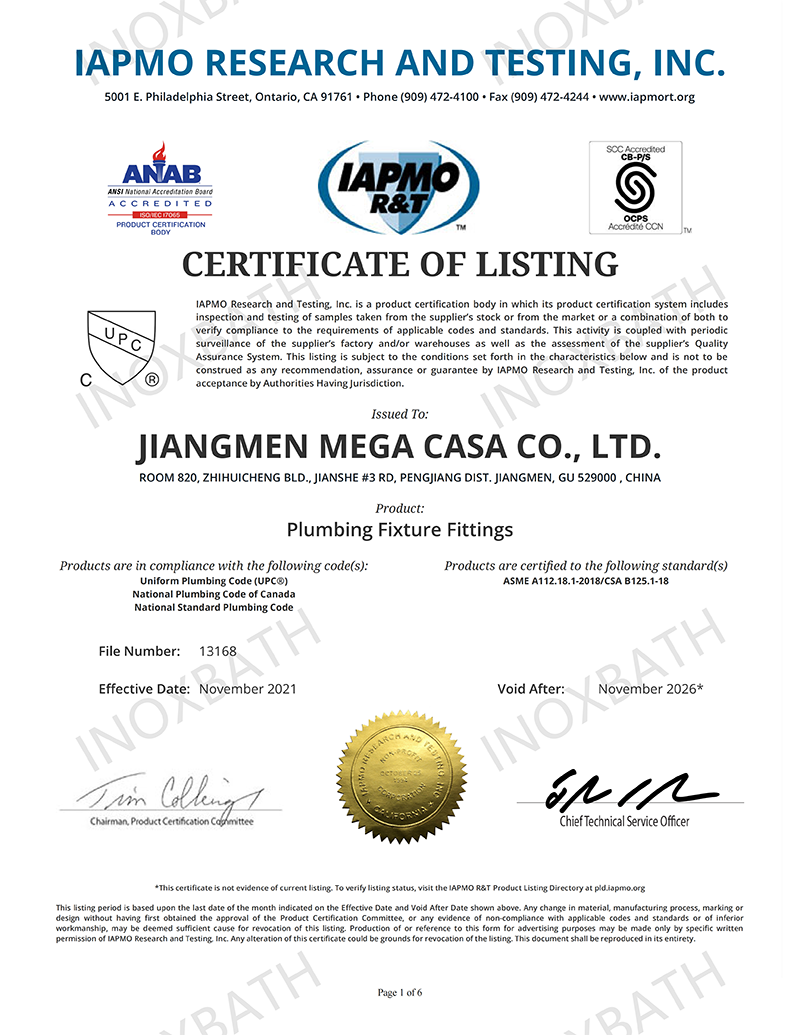
The short version is that cUPC is the certification issued by IAPMO—the International Association of Plumbing and Mechanical Officials. It’s based on the Uniform Plumbing Code, which is the plumbing standard used across much of the United States. The “c” stands for Canada, meaning the product meets both US and Canadian plumbing code requirements. So if you’re supplying a project in North America and you’re not sure which side of the border the product will end up on, cUPC gives you both with one certification.
What products need it?
Pretty much anything that connects to water in a building. Kitchen Faucets, bathroom faucets, shower valves, angle stops, toilets, urinals, lavatories, supply lines, fittings, floor drains—if it carries water or controls water flow in a plumbing system, it generally needs certification to be legally sold or installed in North America.
What does the testing actually look like?
The certification process isn’t just a paperwork exercise. IAPMO tests products to make sure they hold up under real conditions.
For products that touch drinking water, material safety is a big piece. That means NSF 61 testing and compliance with low-lead standards—essentially confirming that nothing harmful leaches into the water supply over time.
Then there’s the mechanical side. Pressure testing to make sure fittings don’t leak. Thread gauge checks to ensure proper fit during installation. Corrosion testing to see how finishes hold up. They also cycle faucets on and off thousands of times to simulate years of use. If something is going to fail early, these tests are designed to catch it before it ever reaches the market.
Water efficiency is also part of it. Flow rates for faucets, showerheads, and other water-consuming products have to fall within regulated limits. That’s tied to North American water conservation requirements.
How a product gets certified
It’s not a one-time thing where you send in a sample and get a certificate that lasts forever.
The process starts with submitting product drawings, material specs, and technical documentation to IAPMO. Then samples go to an accredited lab for testing. If the lab results come back clean, IAPMO does a factory inspection—someone physically visits the manufacturing facility to verify that production processes and quality control systems can consistently produce what was tested.
If everything passes, the certificate is issued, and the product gets listed in IAPMO’s online directory.
But the certification stays active only if the manufacturer keeps up with ongoing requirements. Certificates currently run for five-year cycles, but during that time IAPMO performs annual factory audits and randomly pulls products from the market to test. If a random sample fails, the certification can be suspended or revoked. So maintaining it means maintaining the quality.
Why this actually matters
For anyone buying or specifying plumbing products for North America, cUPC certification isn’t a nice-to-have. In many jurisdictions, it’s illegal to sell or install uncertified plumbing products. For commercial projects, inspectors check. If a product isn’t certified, it doesn’t pass inspection, and that causes delays that cost real money.
There’s also the insurance angle. If a non-certified product fails—leaks, floods, causes damage—insurance companies can deny claims. That’s not a hypothetical risk. We’ve seen it happen.
How to verify if a product is actually certified
Anyone can say they have certification. The way to check is simple: IAPMO maintains a public online directory. You can search by manufacturer name or product model. If the product isn’t listed there, it’s not currently certified, regardless of what the marketing materials say.
At Inoxbath, we maintain cUPC certification for our faucets and related products. For any project requiring North American code compliance, we can provide the listing details so you can verify directly.
If you’re working on a project and have questions about what certification is required, or whether a specific product qualifies, feel free to reach out. It’s one of those things that’s easier to sort out upfront than to deal with when something gets flagged during inspection.