



Beyond Electroplating: The Engineering and Commercial Value of Brushed Stainless Steel Faucets
In commercial hospitality and high-end residential project specification, the longevity of a plumbing fixture is judged by two metrics: its internal valve reliability and its external surface resilience. For decades, mirror-polished chrome dominated the market. However, high-traffic environments quickly exposed its operational flaws—stubborn fingerprint smudges, unsightly water spots, and the inevitable hairline scratches that dull a premium property’s aesthetic.
As architectural trends lean toward understated, industrial, and minimalist design, the brushed finish has emerged as the industry benchmark for heavy-use environments. Far from being a mere aesthetic trend, the creation of a consistent, high-grade brushed stainless steel faucet represents a sophisticated balance of mechanical precision, metallurgy, and surface chemistry.
Understanding the manufacturing realities behind this finish is essential for procurement professionals looking to eliminate field failures and maintain long-term asset value.
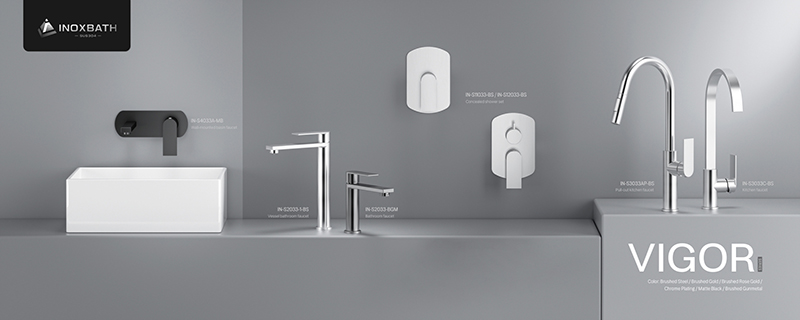
The Mechanical Challenge of Sculpting Irregular Surfaces
Unlike flat steel sheets that can be fed through automated, wide-belt industrial sanders, a water faucet is a complex, three-dimensional piece of geometry. It features cast bodies, sharp angles, and curved spouts. Achieving a uniform, seamless grain across these shifting planes requires a multi-stage mechanical workflow rather than a single abrasive pass.
The process begins long before the actual texturing takes place. Raw castings or machined faucet components possess inherently rough, uneven surfaces. Our production line subjects these pieces to a rigorous sequence of progressive rough and fine grinding. This pre-treatment ensures the underlying metal substrate is perfectly planar. If this foundational stage is compromised by even a fraction of a millimeter, the subsequent brushing phase will magnify the defect, resulting in distorted, wavy patterns that fail quality control.
The actual texturing is an exercise in controlled friction. Using specialized machinery fitted with technical nylon wheels, Scotch-Brite abrasive wheels, and precision-calibrated sanding belts, technicians anchor the faucet into custom rotating jigs. By synchronizing the rotational speed of the workpiece with the directional stroke of the abrasive media, we produce the highly sought-after "hairline" or straight-grain pattern.
Every micro-groove must run perfectly parallel to the longitudinal or transverse axis of the component. A single split-second wobble or pressure variance by the machinery alters the depth of the microscopic valleys, destroying the optical uniformity of the final product.
Rebuilding the Molecular Shield: Passivation and Nano-Technology
A common misconception in surface finishing is that brushing is purely subtractive. In reality, the physical abrasion required to cut those elegant micro-grooves into the steel forcefully disrupts the material’s native chromium oxide layer—the invisible, self-healing passive film that prevents stainless steel from rusting.
Left untreated, a freshly brushed faucet is highly vulnerable to atmospheric oxidation and localized pitting.
To counter this, our manufacturing protocol mandates an immediate post-brushing chemical stabilization process. The brushed faucet bodies undergo an automated acid passivation bath. This specialized treatment cleanly strips away any free iron contaminants displaced during the sanding process while accelerating the natural synthesis of a dense, hyper-pure chromium oxide passive film. The result is a fully restored, corrosion-resistant barrier integrated directly into the newly formed micro-textures.
For premium commercial specifications, we introduce an additional layer of molecular defense: a cured nano-anti-fingerprint coating. Applied via an automated precision spray system and thermally baked to bond with the steel substrate, this ultra-thin barrier alters the surface tension of the faucet. Oleophobic and hydrophobic by nature, it ensures that skin oils and mineral-heavy water droplets cannot easily adhere to the metal. This significantly reduces the cleaning frequencies required in public or commercial restrooms.
The Commercial Justification for Eliminating Electroplating Risks
From a supply chain and liability standpoint, the decision to specify brushed stainless steel over traditional brass-plated hardware introduces profound financial safeguards for wholesalers and developers.
Zero Risk of Delamination
Traditional faucets rely on multi-layer electroplating—depositing layers of copper, nickel, and chrome over a brass base. Over years of exposure to harsh commercial cleaning chemicals and physical impact, these plated layers can suffer from delamination, peeling away from the base metal in sharp, dangerous flakes. Because a brushed finish is achieved by altering the structural surface of the solid stainless steel itself, there is no coating to peel, flake, or blister. The finish is structurally permanent.
Inherent Scratch Integration
In high-traffic installations, everyday wear is unavoidable. When a mirror-polished faucet is wiped down with a coarse cloth or accidentally struck by a ring or utensil, the resulting scratch stands out prominently against the reflective backdrop. On a brushed surface, however, the micro-topography of the grain serves as a natural camouflaging background. Minor superficial scratches simply blend seamlessly into the existing hair-line texture, maintaining the fixture's pristine appearance over an extended operational lifespan.
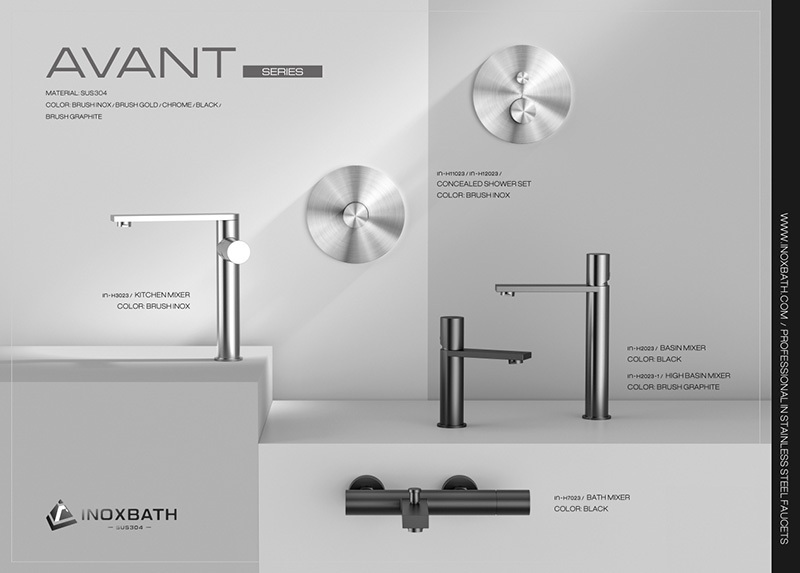
Securing Long-Term Supply Chain Integrity
Beyond the physical attributes of the product, the manufacturing methodology behind brushed stainless steel aligns perfectly with the evolving regulatory landscapes of global markets. Electroplating facilities are under intense environmental scrutiny worldwide due to the toxic heavy-metal wastewater and hazardous chemical chemical waste they generate. As environmental regulations tighten, reliance on electroplated components introduces a high risk of sudden supply chain disruptions due to factory closures.
Mechanical brushing, by contrast, is an inherently clean, environmentally compliant process. It requires no toxic chemical baths, generates no heavy-metal effluents, and yields a product that is entirely lead-free from the core to the surface.
We maintain comprehensive material traceability and process transparency across our entire manufacturing footprint. If you are architectural specifier mapping out a sustainable project footprint, or a high-volume distributor securing a future-proof inventory line, our technical consultants are ready to assist. Contact our office today to request physical material swatches, production logs, and comprehensive compliance documentation.
Inoxbath,connect with Our Technical Team & Request Brushed Stainless Steel Finish Swatches.