



The 2026 Regulatory Cliff: Navigating the EU Drinking Water Directive (DWD) with Stainless Steel
For European plumbing distributors and commercial engineering specifiers, the compliance landscape is undergoing a seismic, irreversible shift. For decades, accessing the European market meant navigating a fragmented maze of national certifications, such as Germany's KTW, France's ACS, and the UK's WRAS. However, as we approach the final months of the transition period, this decentralized era is coming to an abrupt end.
By December 31, 2026, the unified Directive (EU) 2020/2184—commonly known as the Drinking Water Directive (DWD)—will become the mandatory, supreme hygienic legal threshold for any faucet or valve coming into contact with human consumption water across the entire European Union. Products relying solely on outdated national certificates will be legally barred from free market circulation. For procurement directors, adapting to this rigid framework is no longer a future planning exercise; it is an immediate supply chain emergency.
The End of Material Ambiguity: The European Positive List
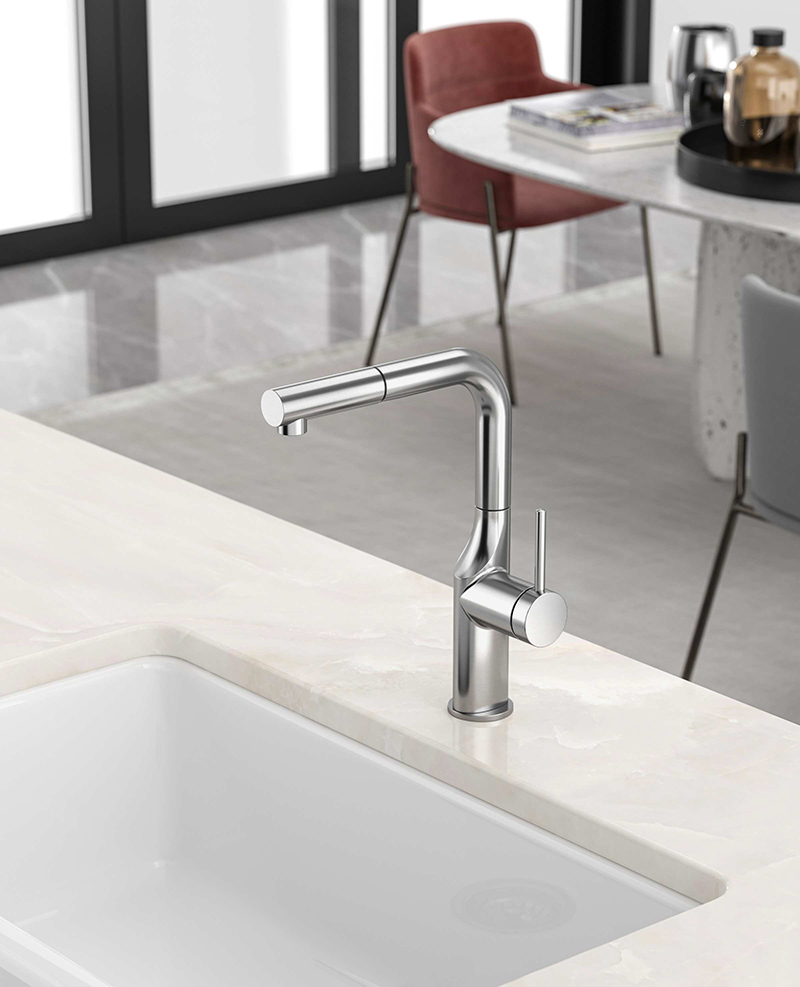
The new DWD framework does not merely suggest better manufacturing practices; it strictly dictates the elemental boundaries of plumbing hardware. In early 2024, the European Commission enacted Delegated Regulation (EU) 2024/369, establishing a definitive "European Positive List" for materials and components permitted to contact drinking water. If a metallic alloy, internal lubricant, or sealing polymer is not explicitly on this list, it is instantly disqualified from the European market. This legislation creates a massive vulnerability for importers relying on traditional brass hardware. The Positive List imposes suffocating restrictions on allowable brass grades, specifically targeting trace impurities like nickel, cadmium, and lead. As foundries struggle to modify brass compositions to meet these purity mandates without destroying the metal’s machinability, the supply chain is experiencing severe cost inflation and failed quality audits. This is where the metallurgical superiority of austenitic stainless steel provides absolute commercial security. Because INOXBATH engineers its primary fluid enclosures from premium 304 and 316 stainless steel, our hardware fundamentally bypasses the heavy-metal leaching crisis plaguing the brass industry. Our steel matrix is inherently lead-free and structurally aligns with the strictest parameters of the new European Positive List, offering importers a zero-risk material foundation.
Surviving the Migration Limits: The Micro-Toxicity Hurdle
Proving material purity requires surviving brutal extraction and migration testing, unified under Delegated Regulation (EU) 2024/370 and the EN 15664 testing standards. European accredited laboratories now measure metallic ion migration at incredibly low thresholds, restricting lead (Pb) migration to an uncompromising maximum of 5 μg/L, and cadmium (Cd) to just 0.5 μg/L. Beyond heavy metals, organic components such as plastic handles and internal gaskets must pass intense microbial growth potential and organoleptic (odor and flavor) assessments to guarantee they do not degrade water quality. At INOXBATH, compliance is built into our forming processes. By utilizing advanced investment casting and precision CNC machining without the need for toxic electroplating, our stainless steel faucets do not leach reactive metallic ions into the water stream. This guarantees that our commercial and residential fixtures easily clear these extreme migration limits, ensuring pristine water delivery and protecting European brands from devastating product recalls.

Institutional Oversight: The Notified Body Mandate
The era of self-certification is over. Under the new Implementing Regulation (EU) 2024/368, faucets and sanitary valves are classified as high-risk "Product Group B" items. This means manufacturers can no longer rely on internal lab reports; they must undergo mandatory conformity assessments conducted by officially designated EU Notified Bodies. For a faucet to legally carry the new DWD compliance mark, the factory must pass a Module B (EU-Type Examination) to validate the product design and test results. More critically, the manufacturing facility itself must survive a Module D (Factory Production Control) audit.
Notified Body inspectors will physically audit the factory's quality management systems to ensure continuous, batch-to-batch compliance.
This rigorous institutional oversight is exactly why partnering with a transparent, fully integrated manufacturer is essential. INOXBATH maintains complete control over our metallurgical processing, from raw material spectrometry to automated testing. Our internal quality control architecture is explicitly structured to welcome Module D audits, providing our European OEM partners with the traceable documentation and EU Declarations of Conformity required by market surveillance authorities.
Securing Your 2027 European Supply Chain
With the December 31, 2026 deadline imminent, European wholesale distributors and project
specifiers must audit their current inventory immediately. Transitioning a multi-SKU product line from outdated national certificates to the unified DWD framework is a complex engineering
challenge that cannot be executed overnight.
At INOXBATH, we offer more than just premium stainless steel fixtures; we offer a fully insulated regulatory pathway into the European Union.
[European sanitaryware brands, distributors, and engineering contractors are invited to secure their compliance transition with INOXBATH. To review our material conformance strategies, request OEM technical submittals, or initiate Module B/D compliance protocols for your upcoming product lines, connect with our engineering desk at www.inoxbath.com/contact-us/]