



The Subterranean Liability: Eradicating Internal Micro-Leakage in Concealed and Articulated Faucets
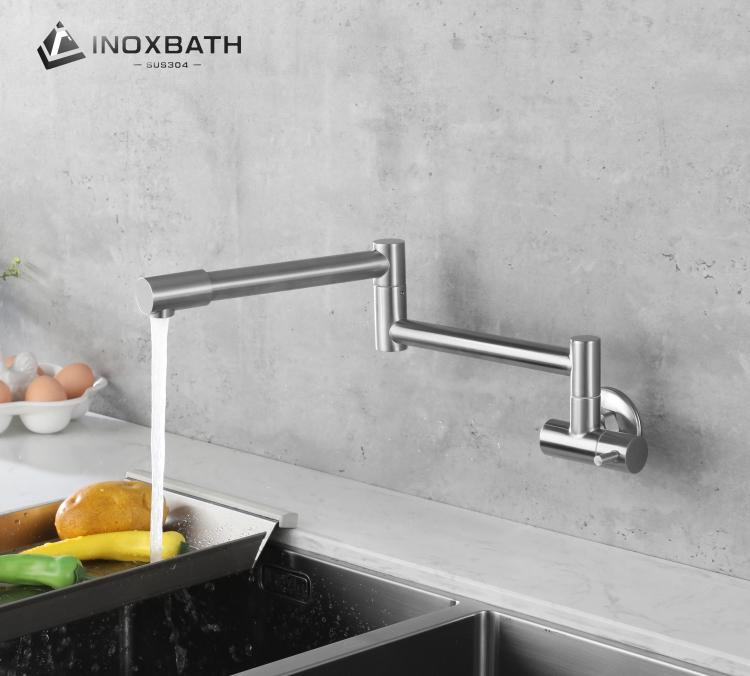
In upscale hospitality and multi-family commercial developments, concealed plumbing fixtures and articulated folding designs have become the definitive standard for minimalist spatial architecture. However, hiding a core valve body behind custom marble or relying on complex internal rotary joints introduces a catastrophic financial vulnerability. A micro-leak in an exposed fixture is a minor maintenance inconvenience; a micro-leak in an in-wall rough-in valve is an operational disaster requiring masonry demolition, triggering severe insurance liabilities, and halting business continuity.
The Hidden Cost of Fluid Dynamics and Metallurgical Fatigue
During a recent post-market operational review with a major European sanitaryware brand, a critical vulnerability was identified in a specific batch of folding fixtures
Whether a global wholesale distributor is specifying a high-traffic Kitchen Tap for a culinary prep station, a heavy-duty cold water tap, or a highly regulated watermark Kitchen Tapdestined for the Oceania market, this risk profile is unacceptable. The Total Cost of Ownership (TCO) skyrockets when a single valve failure demands structural remediation. This is exactly why visionary project managers are transitioning to engineered solutions like our
The Mechanics of Failure and Closed-Loop Process Optimization
Our forensic analysis revealed that the culprit was not structural material failure, but a microscopic manufacturing defect: ultra-fine CNC tooling scratches on the internal wall where the rotary joint sits
Identifying this internal machining flaw dictated an immediate and aggressive overhaul of our production line
To illustrate the sheer disparity in risk mitigation, consider the following engineering parameters evaluated by top-tier procurement officers:
| Engineering Parameter | Traditional Manufacturing Standard | INOXBATH Closed-Loop QA Protocol | Commercial Implication (TCO) |
| Internal Machining | Standard boring; leaves micro-striations | Upgraded CNC polishing; mirror-finish tolerances | Eliminates O-ring abrasion and internal weeping leaks. |
| Material Density | Gravity-cast brass (high micro-porosity risk) | Silica sol investment casting (100% dense matrix) | Prevents catastrophic valve rupture behind walls. |
| Corrosion Defense | Prone to dezincification over time | Solution heat treatment negates intergranular corrosion | Zero risk of internal decay over a 20+ year lifecycle. |
| Leak Validation | Random batch air-testing | 100% automated extreme-pressure hydrostatic testing | Guaranteed structural integrity prior to shipment. |
Relying solely on visual exterior checks is a gamble modern supply chains cannot afford. By maintaining continuous synchronization and full transparency regarding our rectification progress with our brand partners, we transformed a potential supply chain crisis into a definitive testament of our manufacturing integrity
Global sanitaryware brands, wholesale distributors, and commercial specifiers demanding absolute supply chain transparency and zero-defect manufacturing are invited to audit our quality control protocols. To request detailed CAD submittals, review our active WaterMark certification files, or initiate a secure OEM design dialogue for your upcoming commercial projects, collaborate directly with the INOXBATH engineering desk at www.inoxbath.com/contact-us/