



Twelve Billion Dollars Is Moving Through the Bathroom Category. Most Shower Brands Are Still Spec'd Blind.
The cross-border bathroom category has crossed a line that quietly rewrites the arithmetic for every faucet brand still sourcing on the old model. Category GMV has pushed past 60 to 30 to $60 band, the ones piling micro-bubble aeration, LED readouts, Bluetooth pairing and pressure-boost massage onto a single handset, are what's feeding the volume spike, with search interest still climbing week over week. For a B2B buyer this does not read as a consumer fad. It reads as a procurement event, because the two SKU families winning on marketplace shelves are precisely the ones where brand owners lose sleep over landed cost, certification gaps and warranty reserve.
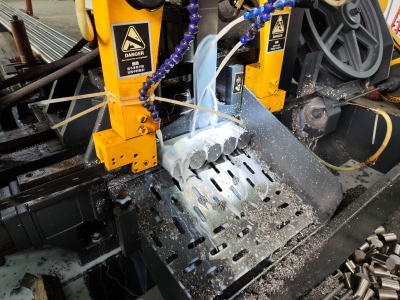
Where the Squeeze Actually Happens
The margin that looks healthy on a spreadsheet gets eaten at three points a C-suite rarely sees until it's too late. The first is total cost of ownership, and it is almost never the unit price — it is the rework that shows up as expedited freight, repacking labor and chargebacks when a thermostatic Shower Faucet arrives with a cartridge that drifts out of calibration before the first tenant takes a shower. The second is compliance and liability. Every serious market now asks for documentation an old-line supplier hates producing: ASSE 1016 or EN 1111 listing for anti-scald, WaterMark or WRAS files for the commonwealth and UK shelf locations, lead-free and low-PbG certificates for North American AHJs that have gotten aggressive about enforcement. The third is job-site friction. A concealed shower means a valve body buried in a wall, and a valve body configured by someone who has never read an installation drawing means a plumber standing in front of open framing, on the clock, with a leak he cannot access. Those three points are where the $12 billion gets interesting for a specifier, and where most quotes you already hold quietly stay silent.
If you've been through a DIN-geometry shower mixer tap swap-out for a UK project, or watched an installer butcher a set-screw trim ring on a wall-mount valve, you already know the difference between a nice sample and a brand you can actually defend. It is the reason a growing share of the buyers we serve are moving their thermostatic and pressure-balance lines toward a single materials discipline. That discipline is the subject of the next section — and it starts with metallurgy, not marketing.
What 304 Stainless Does That Brass and Zinc Won't
The plumbing industry has spent decades treating stainless steel as a premium curiosity when it should have treated it as the default answer to two chronic failures. Brass bodies, in hard water, undergo dezincification — zinc leaches out of the alloy until the part is spongy and porous enough to weep at the threads. Zinc alloy handles and trim rings are worse: cost-engineered down to a price, they corrode from intergranular attack at the first sign of chlorides and become the warranty claim nobody budgeted for. A stainless steel 304 shower tap sidesteps the whole class of failure. There is no zinc to leach, no plating to blister, no lacquer to yellow, and the material's resistance to intergranular corrosion holds up in the coastal and hard-water markets where the warranty headlines actually get written.
What separates a dependable OEM shower manufacture from a trading company dressed as one is whether the metal story is verifiable, not asserted. The table below is the working version of the trade-off we put in front of buyers every week.
| Decision criterion | Thermostatic Shower Faucet, 120 band | Feature/flow shower, 60 band | What it actually means for your spec |
|---|---|---|---|
| valve standard (anti-scald liability) | ASSE 1016 / EN 1111 thermostatic cartridge, ± temperature drift tolerance | Often a pressure-balance or single-flow valve with no thermal-limit duty | The high-ticket SKU is also the high-liability SKU — certify or don't ship |
| Material discipline | Investment-cast brass or 304 body; zinc handles threaten dezincification | Plated zinc / ABS trim, lowest cost per unit | Cost is won or lost in the alloy you hide inside the wall |
| Compliance burden | WaterMark, WRAS, lead-free certs are non-negotiable | Lighter, but low-quality plating still fails surface-migration tests | One audit failure erases the savings from ten cheap quotes |
| Warranty & TCO exposure | Warranty claims cluster around drift, leak and finish | Claims cluster around electronics, aeration block, pressure surge | Stainless shifts risk from "when" to "rarely" |
The numbers worth carrying away are not the 120. They are the factory-side cost to hold ±1°C on a cartridge across 40,000 cycles, the difference between a hydrostatic pressure test run to 1.6 MPa on every single body versus a lot-sample, and whether your supplier can hand you a mill test report (MTR) proving the alloy is actually 304 and not a lookalike. Those are the points where a factory either has an engineering discipline — investment casting, mirror-finish polishing cells, inline pressure decay testing — or it has an excuse. Most quotes you will receive this quarter are, in effect, an excuse written in polished brass.
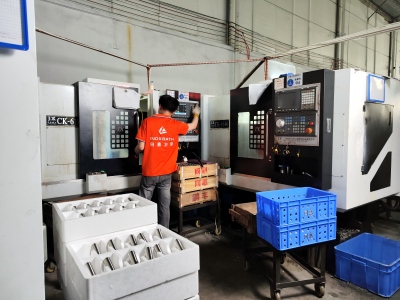
The brands that win the next procurement cycle will not be the ones who found the cheapest thermostatic Shower Faucet at Canton Fair. They will be the ones who stopped specifying "a shower mixer tap" as a commodity and started specifying a material, a valve standard and a test report — because those are the only three things that survive contact with a valve wall cavity, a hard-water municipality and an insurance lawyer.
If that is the conversation you would rather have before the quote stage — not after a field failure — we make it easy to start. Request CAD submittals and MTR samples for our 304 thermostatic and concealed shower ranges, review the WaterMark and WRAS files before you commit a single line item, or bring us a private-label spec and let's talk through it as an OEM design dialogue, not a sales call, at www.inoxbath.com. The $12 billion is moving. The question is whether your next order moves with it, or gets left behind the wall.