



Why Choose a 304 Stainless Steel Bathroom Faucet? A Practical Look at the Long-Term Benefits
If you import or distribute bathroom faucets, you know the real cost isn’t the unit price. It’s warranty claims, rejected shipments, and compliance failures.
Many brass faucets look fine on paper, but they bring hidden risks: lead content, plating failures, and inconsistent alloy quality.
304 stainless steel avoids most of those problems from the start. Here’s what that means for your business.
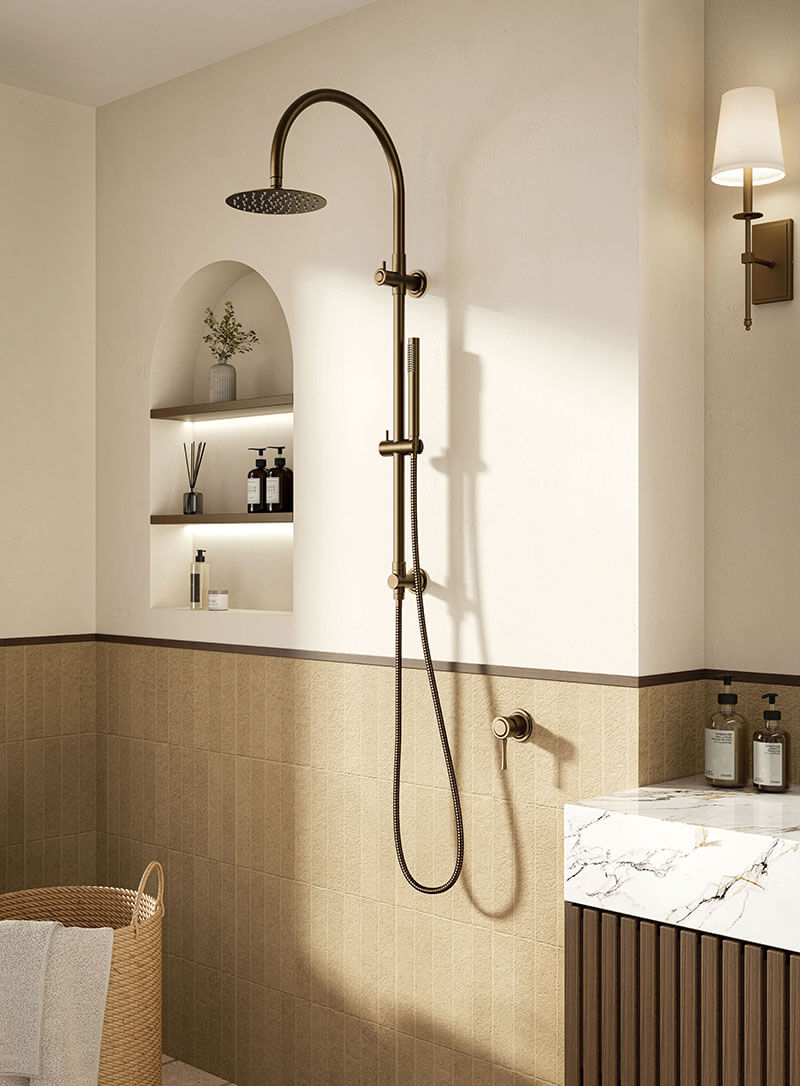
Long-term durability that saves money
Labour is expensive in North America and Europe. A single plumber visit can cost $300 or more. So when a faucet leaks or seizes up, the repair bill quickly exceeds the original price.
304 stainless steel has about twice the strength of standard brass. That means the faucet body can be thinner and lighter without cracking under pressure. It also handles freezing winters better – no bursts.
Corrosion resistance is the real difference. Brass relies on a thin plated layer. Scratch it, and rust starts. Stainless steel contains 18-20% chromium and 8-10.5% nickel. That forms a passive film that protects the metal. No plating to fail. No rust from the inside out.
Market regulations – made simple
Different regions have different rules. The table below shows what matters and why stainless steel makes compliance easier.
| Market | Key Certification / Rule | Why 304 SS Helps |
| North America | NSF/ANSI61(health), NSF/ANSI372 (lead‑free), UPC, CSA | Naturally lead‑free. No special alloys or extra testing. |
| Europe | REACH (SVHCs), CE, ERP water efficiency | Stable chemistry, no hidden harmful substances. |
| Australia / New Zealand | WaterMark(AS/NZS3718, AS/NZS 4020) | Meets material safety requirements without issue. |
Finish that lasts, not just looks
A plated brass faucet looks great until the first scratch. Then moisture gets under the plating, and it bubbles and peels.
304 stainless steel faucets are brushed or matte finished – directly on the metal. There’s no coating to delaminate. A scratch won’t rust or flake. Cleaning is easy: a damp cloth wipes away fingerprints. The industrial look fits modern bathrooms perfectly.
Better for the environment
Stainless steel faucets are made without electroplating. That means no toxic wastewater. The material is also 100% recyclable.
With the EU’s Carbon Border Adjustment Mechanism (CBAM) coming, products with lower life-cycle emissions will have an edge. Stainless steel fits that picture.
Total cost of ownership – the real math
A cheap brass faucet saves you $20 upfront. But if it fails in seven years, you pay for a new one, plus installation, plus potential water damage.
A 304 stainless steel faucet often lasts 15‑20 years. It’s also lighter, so shipping costs less. And because it passes certifications reliably, you avoid costly rejections or recalls.
What we offer at Inoxbath
We manufacture 304 stainless steel faucets for B2B clients supplying North America, Europe, and Australia. Our products are ready for NSF, REACH, and WaterMark certification. We also support OEM/ODM requests – finish, cartridge, and aerator options.
If you want to reduce compliance risk and after‑sales headaches, let’s talk about a trial order.
*Inoxbath – B2B stainless steel faucets, built for real-world supply chains.*